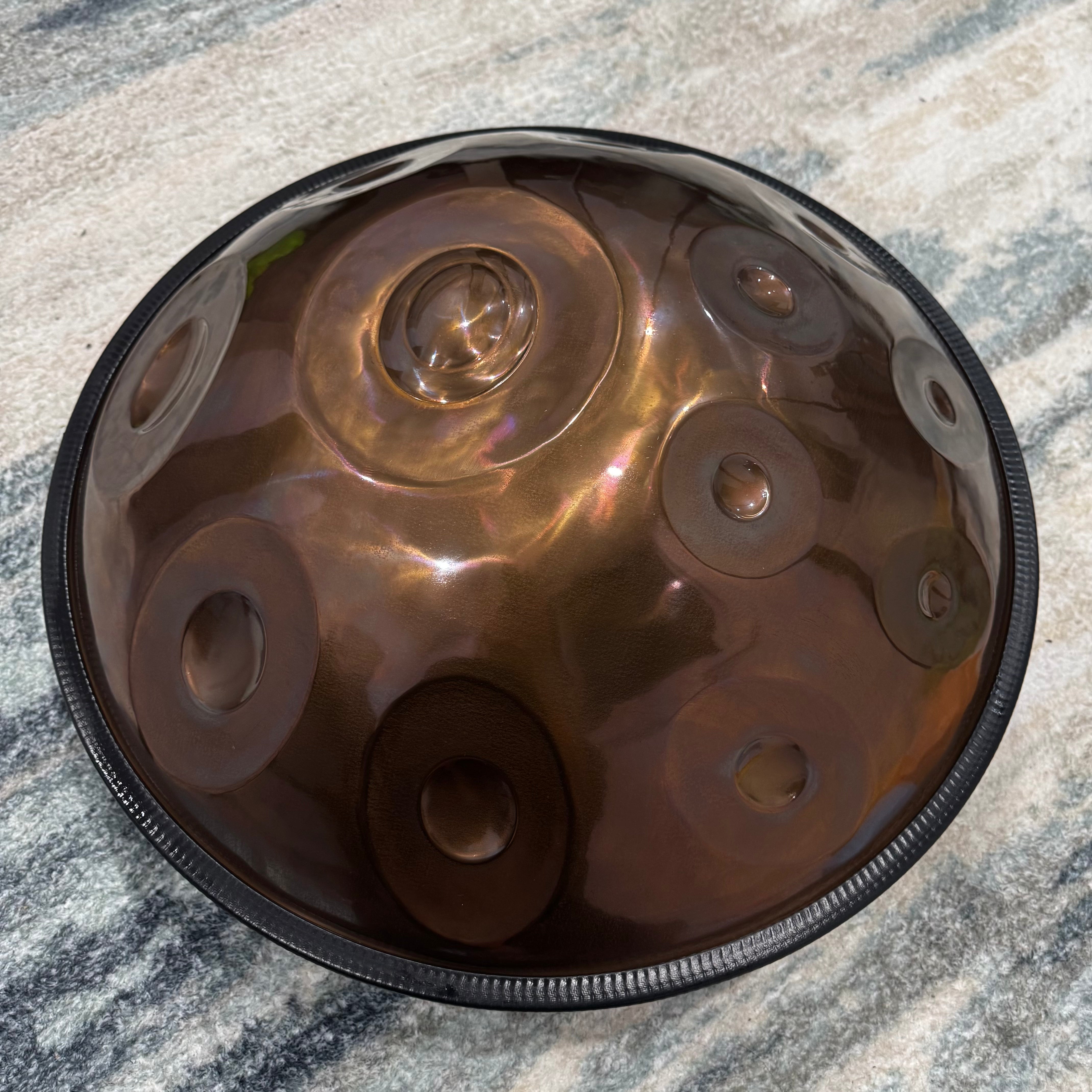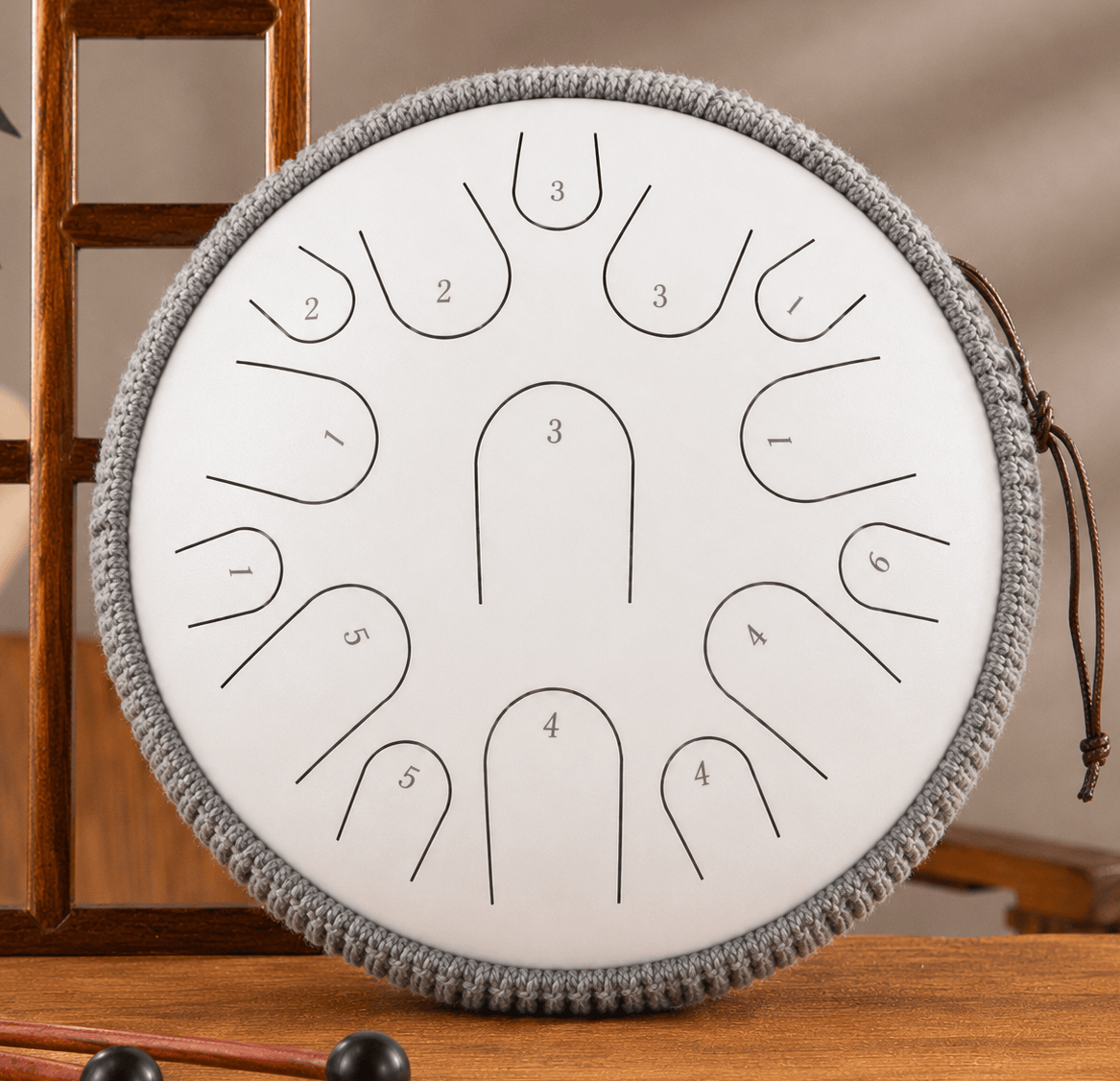
If you are choosing your first tongue drum, the notes can feel more confusing than the drum itself.
You might see a 8-note pentatonic drum, an 8-note C major drum, a 13-note C major drum, or a 15-note D major drum and wonder: Which one will actually be easy to play?
The gentle truth is that there is no single “best” note layout for everyone. A small 6 or 8-note drum can be beautiful for meditation, children, travel, and simple melodies. A larger 13 or 15-note drum gives you more songs and range, but it also asks for a little more visual focus when you are learning.
This guide explains tongue drum notes in plain language so you can choose with confidence, especially if you do not read music yet.
First: what do tongue drum notes mean?
Each cut-out tongue on a steel tongue drum is tuned to one musical note. When you tap that tongue with a mallet or your finger, it vibrates and creates a clear bell-like tone.
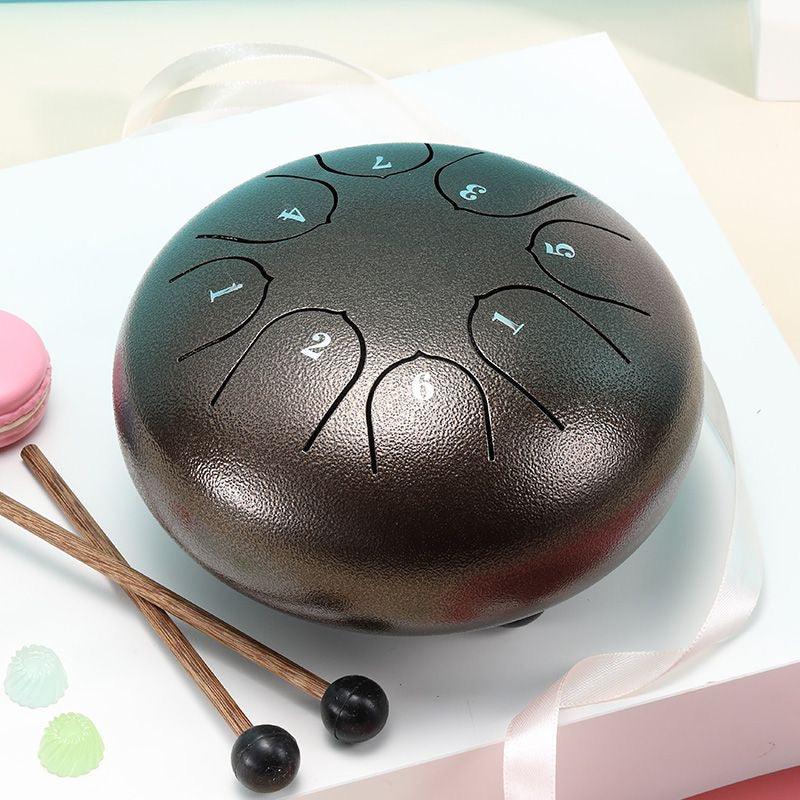
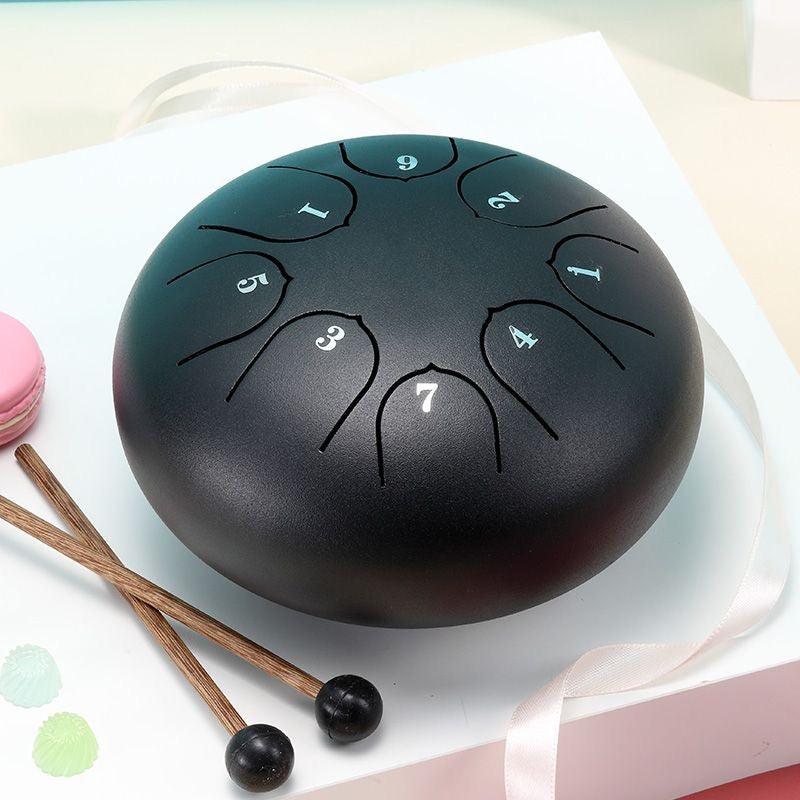
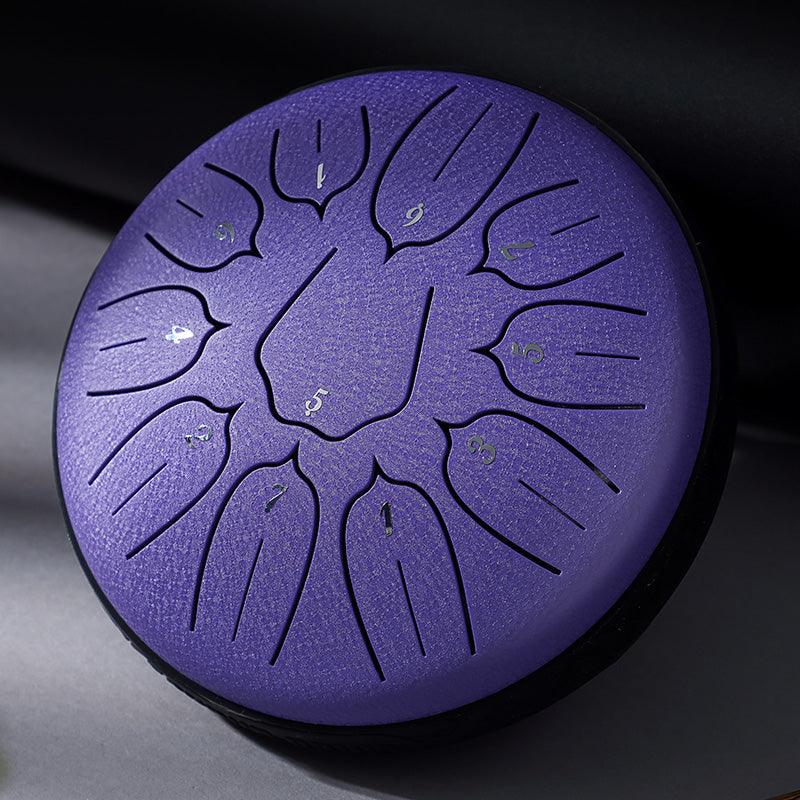
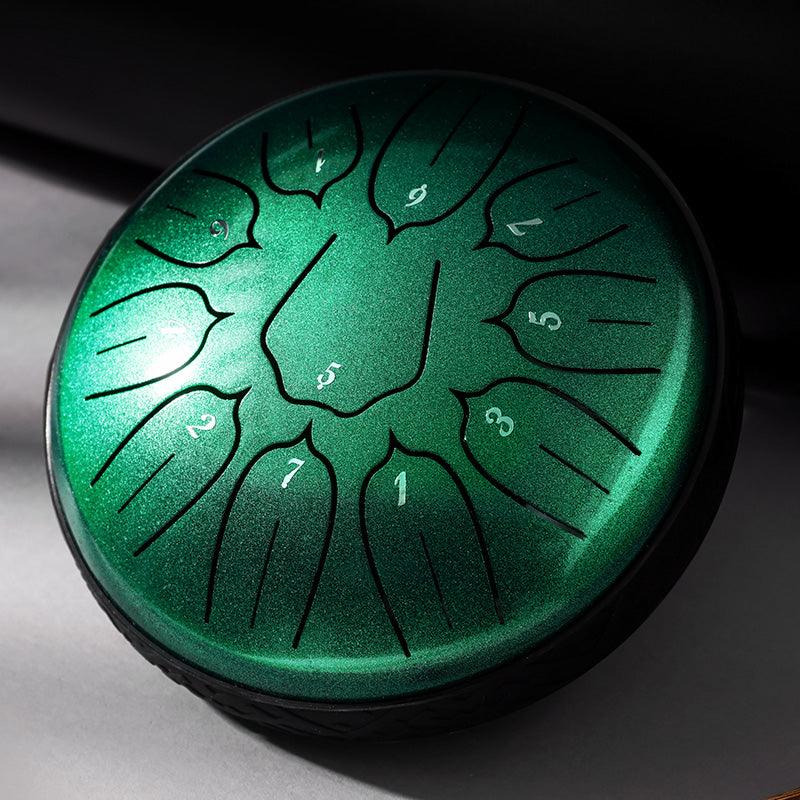
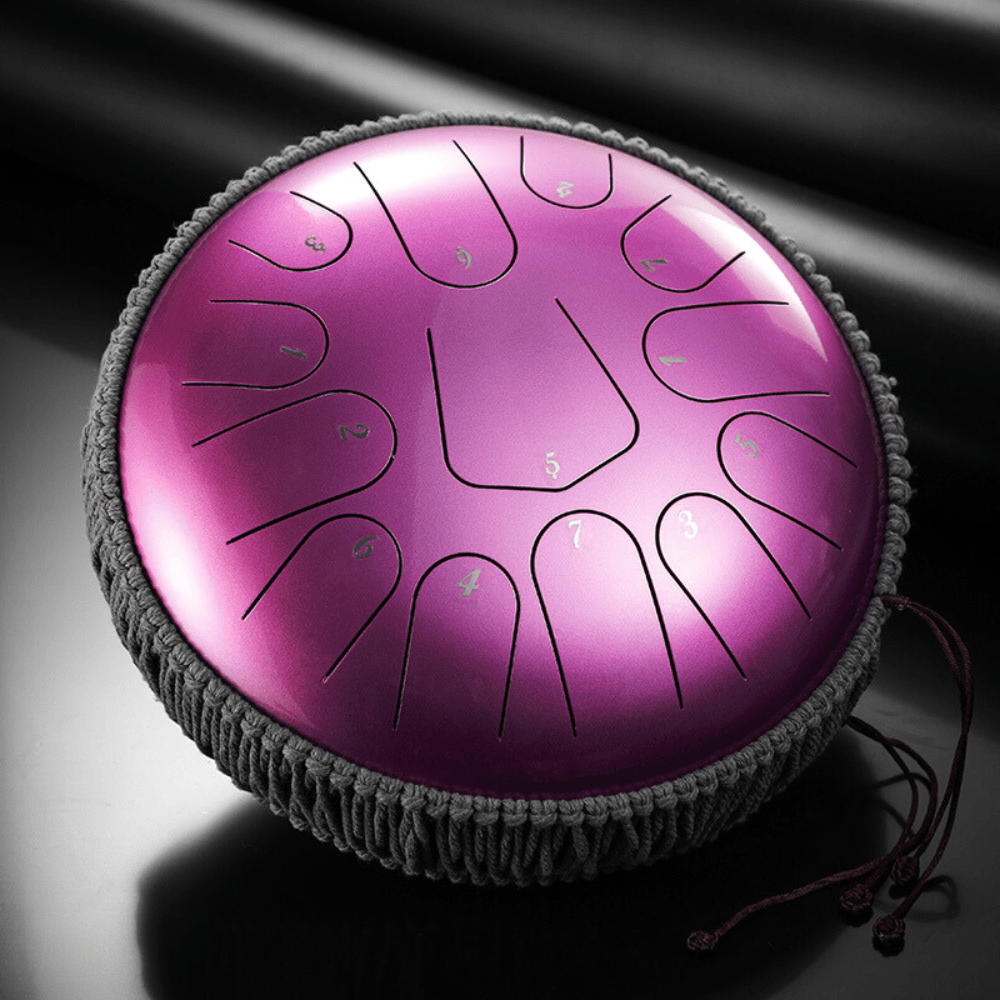
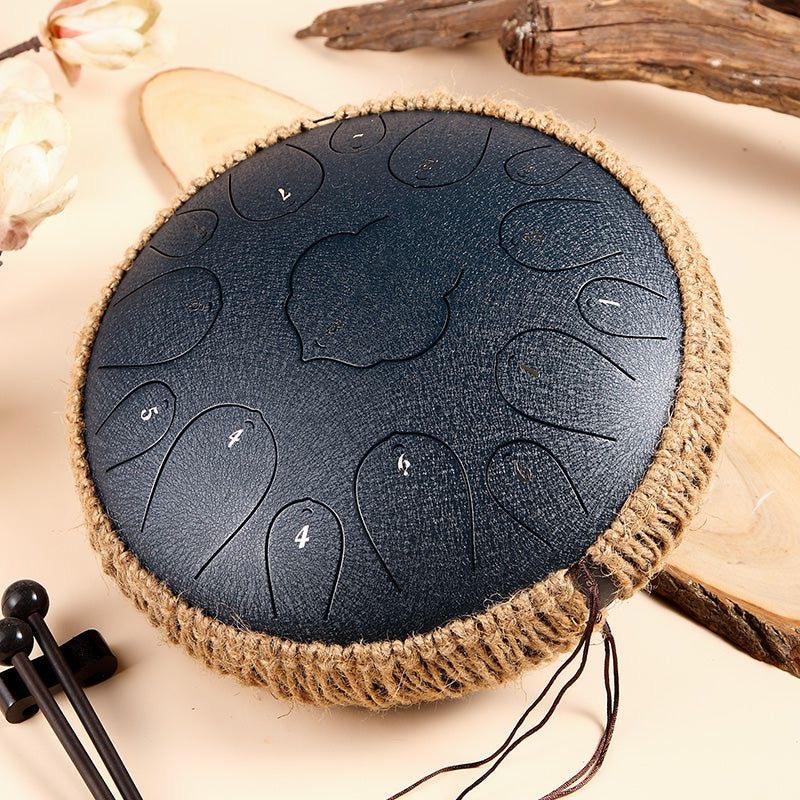
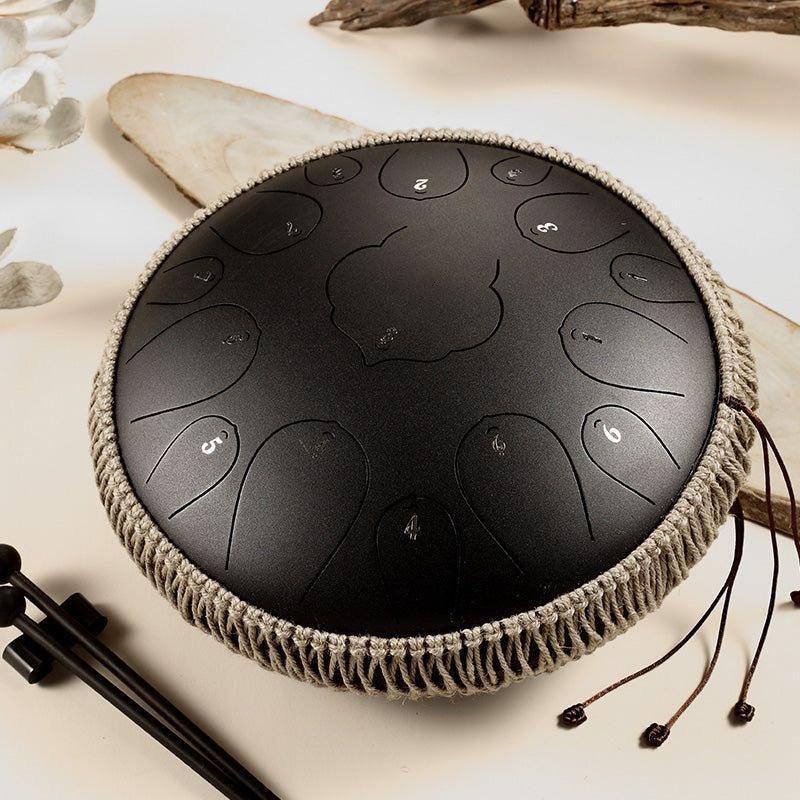
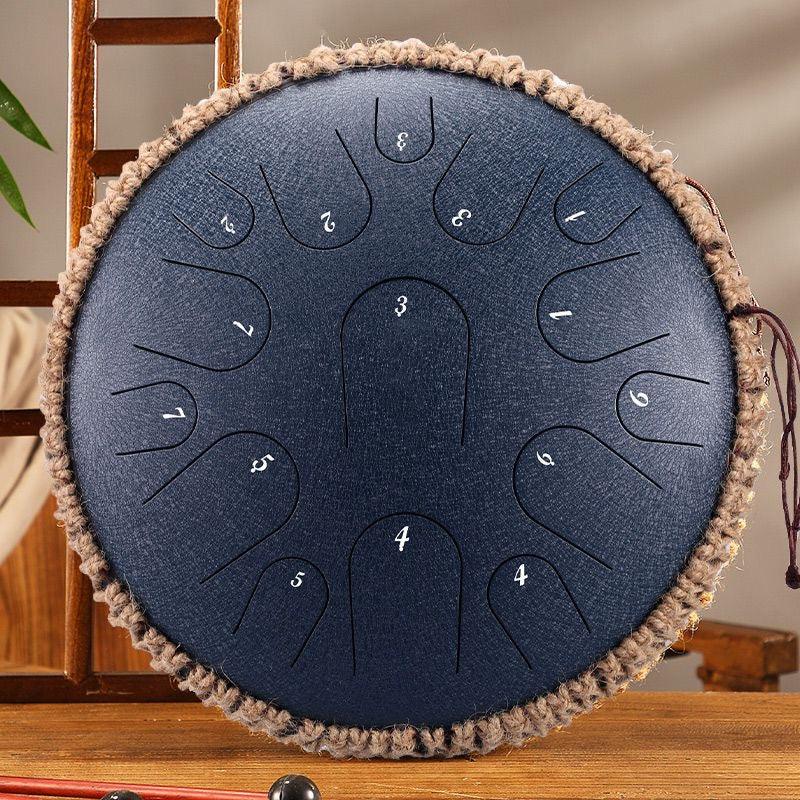
Most beginner tongue drums label the notes with numbers as well as note names. For example, you may see numbers like 1, 2, 3, 5, 6, or letters like C, D, E, G, A. The numbers are there to make playing easier. Instead of needing to read traditional sheet music, you can follow simple numbered song tabs.
That is one reason tongue drums are so welcoming for beginners. You do not need strong rhythm skills, music theory, or years of lessons before you can enjoy a calm sound.
If you are still deciding whether a tongue drum is the right first instrument for you, you may also enjoy our guide, The Gentle Path to Sound Healing: Why Tongue Drums Welcome Beginners.
What is a scale?
A scale is the group of notes chosen for the drum. It is like the colour palette of the instrument.
Some scales feel bright and open. Some feel dreamy or meditative. Some are designed so almost every note sounds pleasing together, even if you play randomly.
For beginners, the most common tongue drum scales are:
- Major scales, such as C major or D major, which usually feel clear, gentle, and familiar.
- Pentatonic scales, which use fewer notes and are very forgiving for free playing.
- Minor scales, such as D minor, which often feel deeper, more emotional, or cinematic.
None of these are “wrong”. The right choice depends on how you want to use the drum.
C major vs D major: which is easier?
On most instruments, C major is often considered the easiest key for beginners because it uses only the natural white keys on a piano (C, D, E, F, G, A, B), making music theory easier to understand.
However, this does not apply to tongue drums. One of the biggest myths is that a C major tongue drum is easier to play than a D major tongue drum. In reality, they are exactly the same difficulty.
The reason is that tongue drum sheet music is almost always written using number notation (1–7) rather than note names. These numbers don't represent specific notes—they represent the position of each note within the scale.
For example:
C Major
- C D E F G A B C
- 1 2 3 4 5 6 7 1
D Major
- D E F♯ G A B C♯ D
- 1 2 3 4 5 6 7 1
Notice that the numbers are identical. Although the actual pitches are different, your playing pattern stays exactly the same.
If you have a song written in C major for another instrument, you simply convert the notes into numbers (C=1, D=2, E=3, etc.). Then, on a D major tongue drum, you play those same numbers (1–7), and the melody works perfectly in D major.
So if all of this sounds a bit confusing, just remember one simple thing: for tongue drums, C major is not easier than D major. They use the same numbered patterns, the same playing technique, and are equally beginner-friendly. The only real difference is the overall pitch and character of the sound.
For a complete beginner, both C major and D major can work well. The more important question is usually not “C or D?” but:
- How many notes does the drum have?
- Are the notes clearly labelled?
- Will I be playing mostly meditation sounds, simple songs, or both?
- Do I want a small portable drum or a fuller-sounding instrument?
Pentatonic drums: the most forgiving option
A pentatonic scale uses five main notes. Many tongue drums repeat or extend those notes across 6 or 8 tongues.
The lovely thing about pentatonic drums is that they are very hard to make sound harsh. They are wonderful for free playing, breathwork, children, sound baths, and people who want to relax without thinking too much.
The trade-off is that pentatonic drums can be more limited for playing recognisable songs. If your dream is to follow lots of song tabs, you may outgrow a small pentatonic drum faster.
How many notes should a beginner choose?
Note count affects both simplicity and possibility. Fewer notes mean less to learn and a calmer layout. More notes mean more songs, more range, and more room to grow.
| Note count | Best for | What to know |
|---|---|---|
| 6 notes | Children, gifts, travel, simple meditation | Very approachable, very limited for songs. |
| 8 notes | Children, gifts, travel, simple meditation | A gentle balance of ease and usefulness. |
| 11 notes | Beginners who want a little more range | Still friendly, with a lot more song options than 8 notes. |
| 13 notes | Song learning, practice, and longer-term use | More versatile, but the layout takes slightly longer to memorise. |
| 15 notes | Players who want the most flexibility with the best sound |
Most versatile, richest sound. Slightly steeper learning curve. |
6-note tongue drums
A 6-note tongue drum is sweet, tiny, and cute. It makes a lovely decorative piece, sensory instrument, or gift for young children. However, with only six notes, its musical range is very limited, so there are very few songs it can actually play. If your goal is to learn melodies or explore music more deeply, you'll likely outgrow it quite quickly.
8-note tongue drums
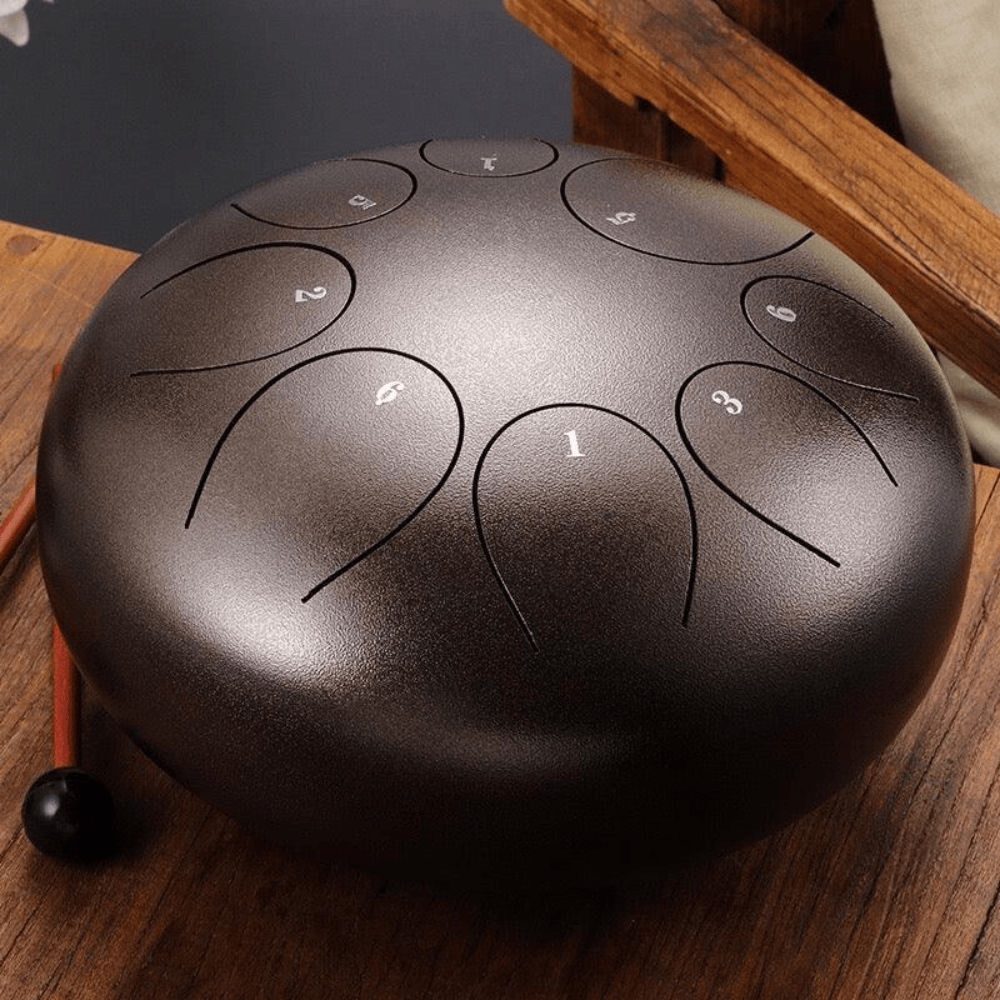
An 8-note C major tongue drum is especially popular with young children. Its compact size is cute, sturdy, and easy to carry around, making it a great companion for home, school, or travel.
With only eight notes, it's easy for children to find the right notes without feeling overwhelmed, so they can start playing simple nursery rhymes and beginner melodies very quickly. Its bright, cheerful sound also makes it fun and engaging for young players.
For adults, however, the limited note range can feel restrictive. Many popular songs simply don't fit within eight notes, and many adults also prefer the deeper, warmer sound of larger tongue drums over the bright, happy tone of an 8-note C major drum.
11-note tongue drums
Most 11-note tongue drums are still compact, travel-friendly instruments, making them a perfect balance between portability and musical range. If you're an adult who doesn't want a large drum but still wants to play more enjoyable melodies, an 11-note drum is an excellent choice.
Compared with an 8-note drum, the extra notes make a big difference. You'll be able to play many more songs that adults enjoy, while the drum remains simple enough for complete beginners.
It's also a great option for children, especially those around 7 years old and above. The additional notes give them much more room to grow, so they're less likely to outgrow the instrument as quickly as they would with an 8-note drum.
13-note tongue drums
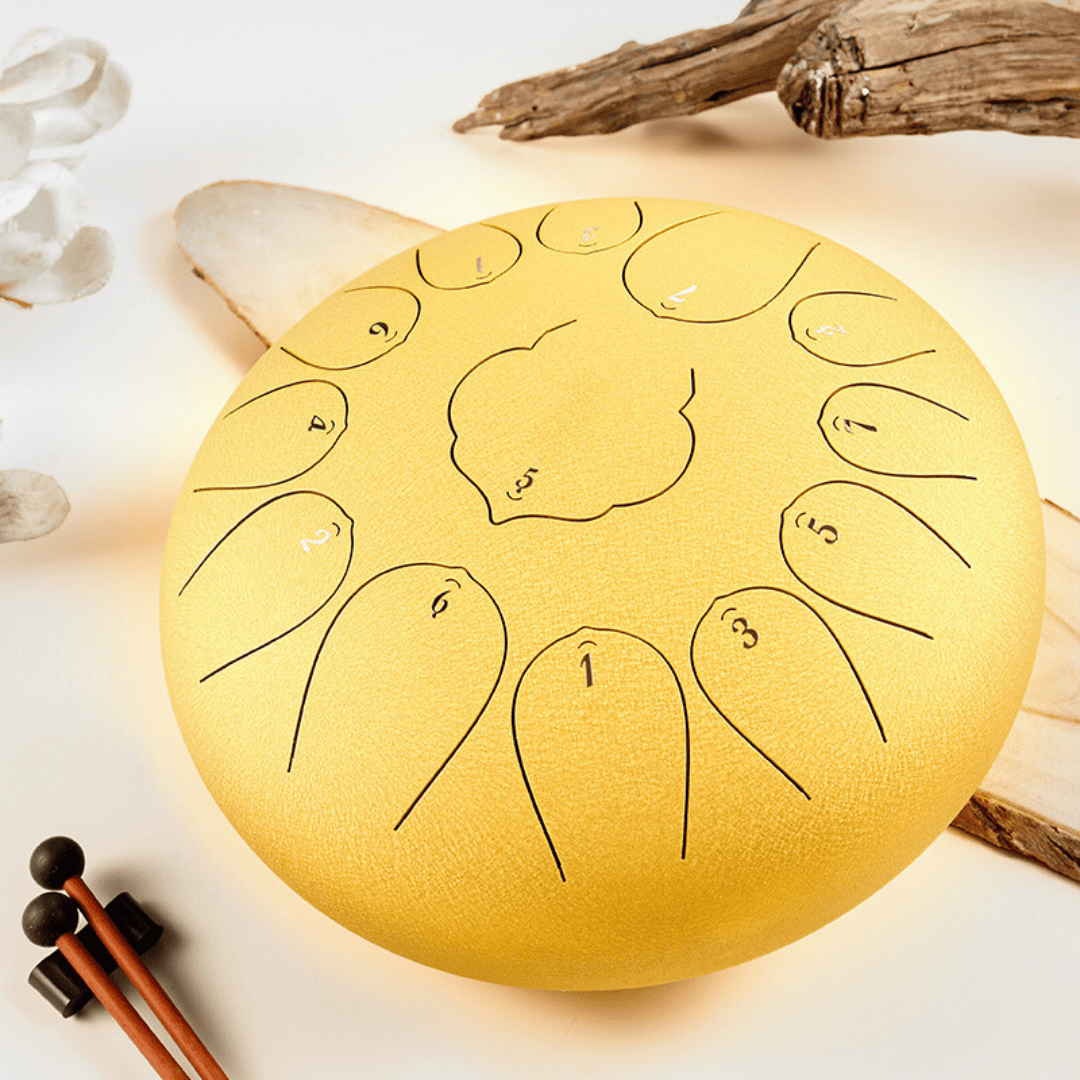
A 13-note tongue drum is where the instrument starts to feel much more musical. Compared with an 11-note drum, the extra notes don't just add more songs—they also allow you to play simple bass notes and harmonies with your other hand, giving your music much more depth and richness.
Most 13-note drums are also slightly larger, producing a deeper, warmer, and more meditative sound than compact mini drums. Many parents actually prefer the larger size because of its calming tone, and the larger tongues are often easier for children to strike accurately.
The main trade-off is that there are more notes to learn, so finding the right note takes a little more practice at first. In addition, because the higher notes are packed closer together, they require better playing technique. Correct mallet grip, striking position, force, and rebound become more important. Beginners sometimes find the highest one or two notes don't sound clearly at first—but this is usually a technique issue rather than a problem with the drum. Once you develop the proper touch, the full range becomes easy to enjoy.
15-note tongue drums
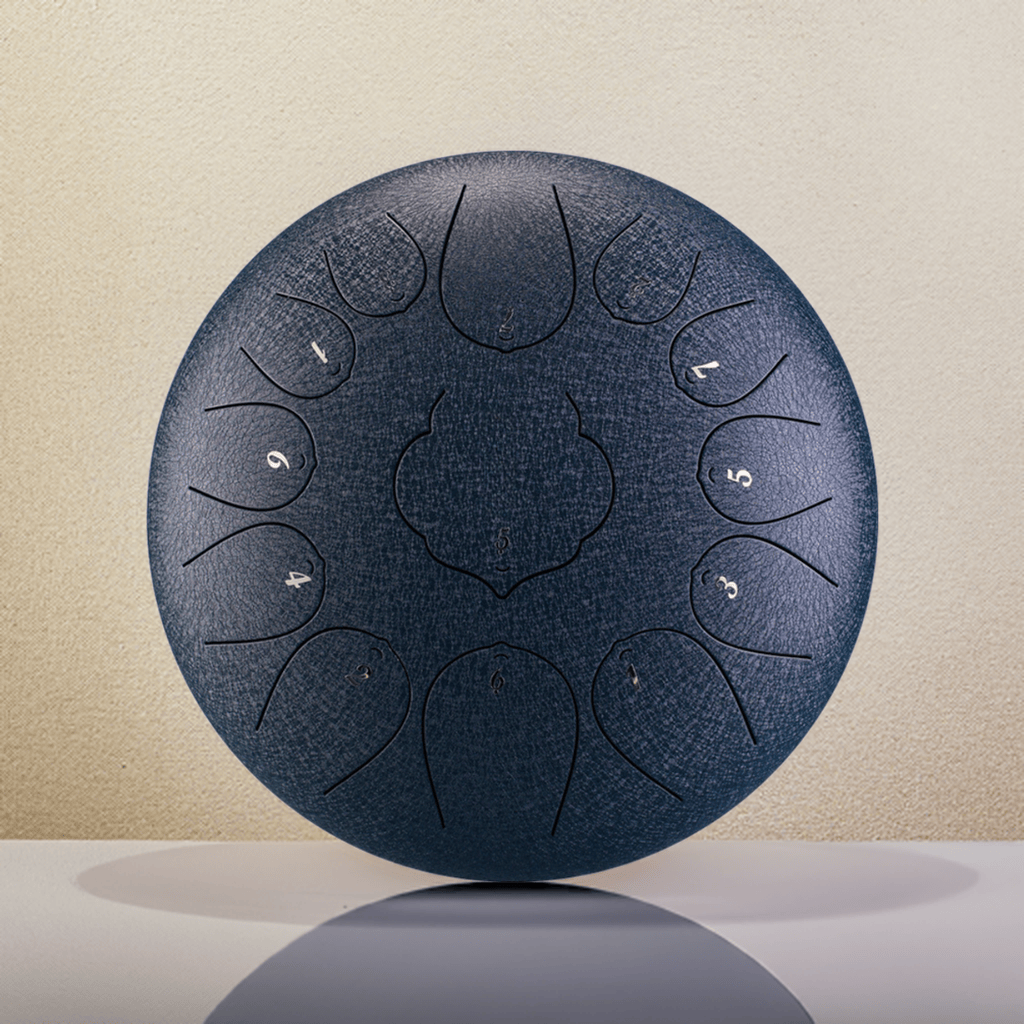
For most adults, a 15-note drum offers the best balance of versatility, musical expression, and long-term enjoyment with access to a huge library of free tutorials, numbered tabs, and songs available online. It offers enough notes for everything from simple beginner melodies to much more expressive playing.
Its deep, warm tone also makes it outstanding for meditation and free play. You can easily create relaxing pentatonic layouts by simply avoiding a couple of notes (4 and 7), allowing you to improvise freely without worrying about playing "wrong" notes. At the same time, the full 15-note range lets you play hundreds of songs, add bass notes and harmonies with your other hand, and even accompany singing. It's the closest thing to an all-round tongue drum.
The trade-off is that it takes the longest to become familiar with. With 15 notes, finding the right note naturally takes more practice than on smaller drums. Like other high-note-count drums, the highest tongues are also much smaller, so they require more accurate technique. If the highest one or two notes seem quiet when you first receive the drum, it's almost always a playing technique issue rather than a quality issue. These small, high-pitched tongues need a precise strike on the sweet spot, a firmer hit, and a quick rebound. Once your technique develops, playing them becomes completely natural.
Which note count should you choose?
Here is the simple version:
- 6 notes – Cute, simple, and relaxing.
- 8 notes – Best for young children.
- 11 notes – Best compact all-round travel drum.
- 13 notes – Richer sound with bass and harmony.
- 15 notes – Our top pick for adults: the most versatile choice.
If you are buying for sound healing, meditation, or relaxation, do not feel pressured to choose the biggest note count. A smaller drum with a beautiful tone can be more peaceful than a larger drum that feels visually busy.
If you are buying to learn songs, I would lean toward 11 notes as the minimum, and 13 to 15 notes if you want more long-term flexibility.
Do you need to read music?
No. Most beginners start with number notation. A simple song tab might show numbers in order, and you tap the matching numbered tongues on the drum.
Over time, you may begin recognising note names naturally. But you do not need to wait until you understand theory. The tongue drum is designed to be played and enjoyed from the first day.
What about 432 Hz and 440 Hz?
Some tongue drums and sound healing instruments are available in either 432 Hz or 440 Hz tuning. While this topic often gets a lot of attention online, for most beginners it is far less important than choosing the right scale, note count, and a quality instrument you'll enjoy playing.
For most people, we recommend choosing 440 Hz. It is the international standard, making it much easier if you ever want to play with other musicians, accompany backing tracks, or learn songs from online tutorials. Since tongue drums cannot simply be retuned between 432 Hz and 440 Hz, choosing the standard tuning gives you far greater flexibility in the future.
The actual difference in sound between 432 Hz and 440 Hz is very subtle. Without an electronic tuner or a direct side-by-side comparison, most people cannot reliably tell which one they're hearing. Both can sound beautiful, so don't let the tuning become more important than the instrument itself.
A gentle buying checklist
Before choosing your first tongue drum, ask:
- Do I want meditation and relaxation, or song learning?
- Will a child or adult be playing it most?
- Do I want something tiny and portable, or fuller sounding?
- Are the notes easy to see?
- Is the scale suitable for the songs or feeling I want?
And most importantly: does the sound make you want to keep playing? A beginner instrument should invite you in, not make you feel small or confused.
FAQ
Is an 8-note tongue drum enough?
Yes, especially for young children. An 8-note C major drum is easy to learn, portable, and great for nursery rhymes. Adults, however, may find the note range too limited for many songs.
Is a 15-note tongue drum too hard for beginners?
No. It's our top recommendation for adults because it's the most versatile. It simply takes a little longer to learn the layout, and the highest notes require better playing technique.
What scale is best for meditation?
Pentatonic scales are naturally relaxing and easy to improvise on. A 15-note major-scale drum can also become pentatonic by simply avoiding notes 4 and 7, while still letting you play a much wider range of songs.
Can I play real songs on a tongue drum?
Yes. The more notes you have, the more songs you can play. An 8-note drum is great for simple melodies, while 13- and 15-note drums offer far more musical possibilities.
Should I choose C major or D major?
On a tongue drum, they're equally easy to play. Numbered notation works exactly the same in both keys, so choose the sound you prefer rather than worrying about difficulty.
Final thoughts
The best tongue drum notes for you are the ones that match how you will actually use the instrument. If you want calm, choose simplicity. If you want songs, choose enough notes to grow.
For a broader look at size, material, tuning, and scale, continue with our related guide: How to Choose Your Ideal Steel Tongue Drum.