Melodic Forest • Beginner Series • Part 1
Just got your first handpan? You don't need to read music, learn complicated theory or play anything fancy. Let's get comfortable with your notes, find a beautiful sound and try your first two songs.
All you need: your handpan, a comfortable seat and a few minutes of practice.
1. Get to know your notes
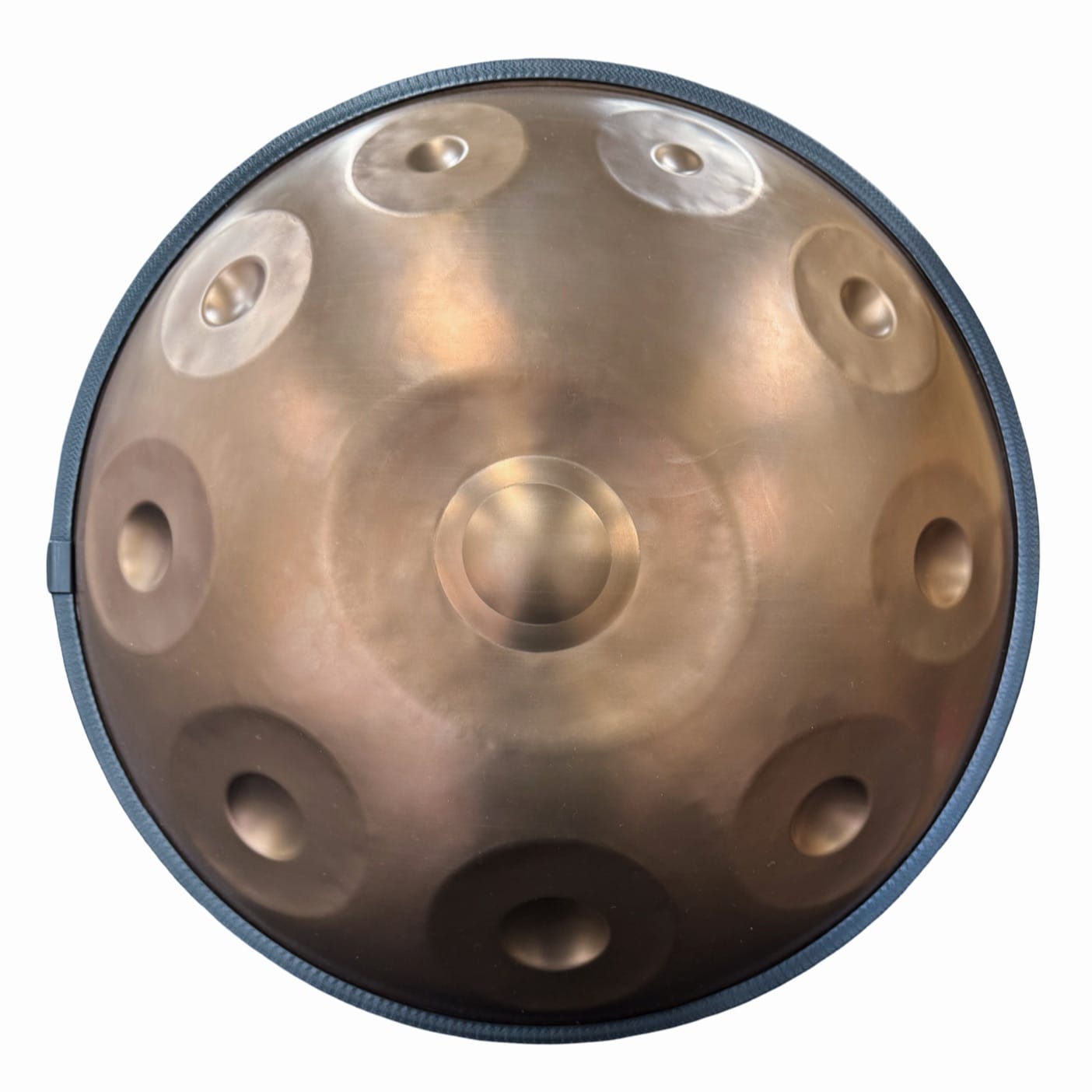
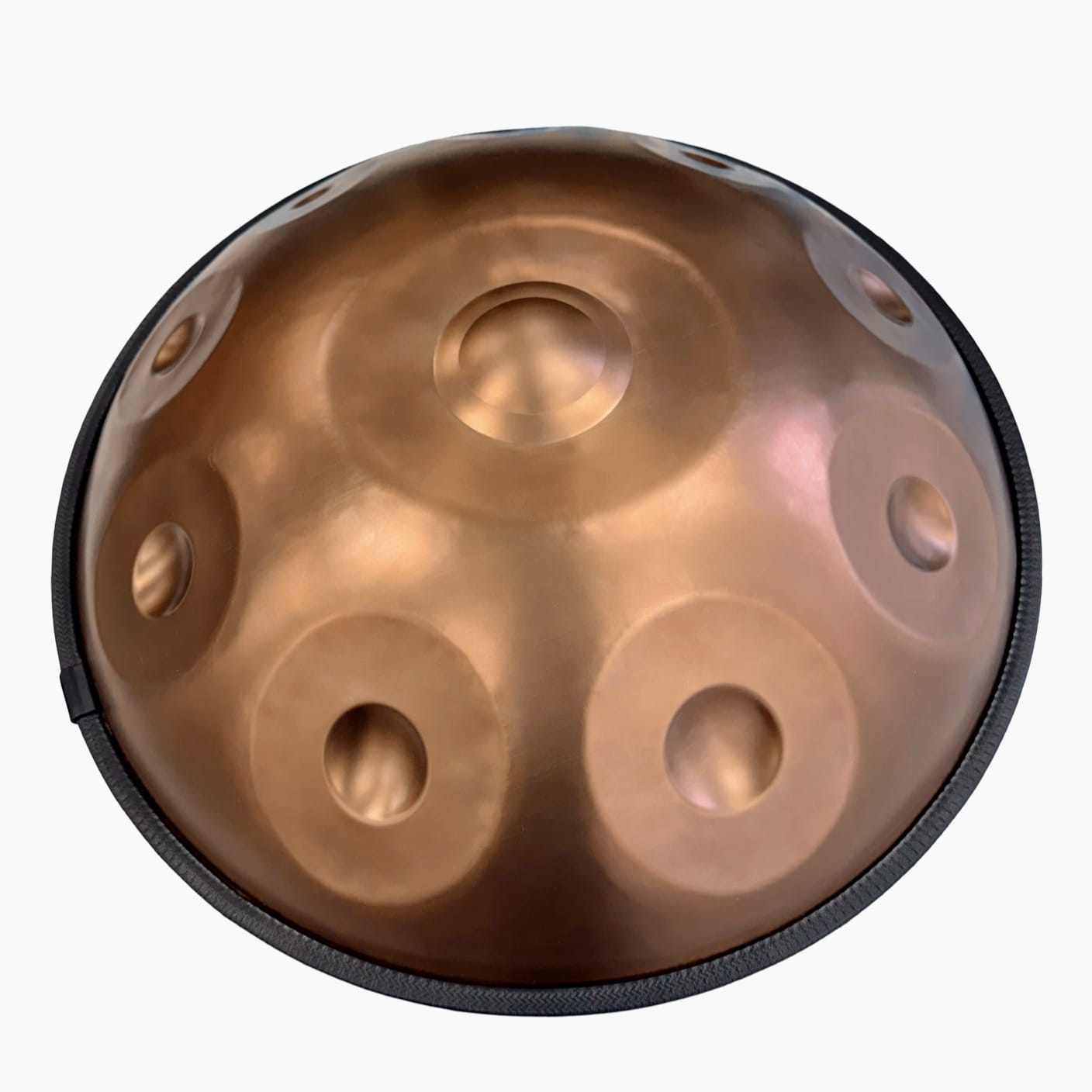
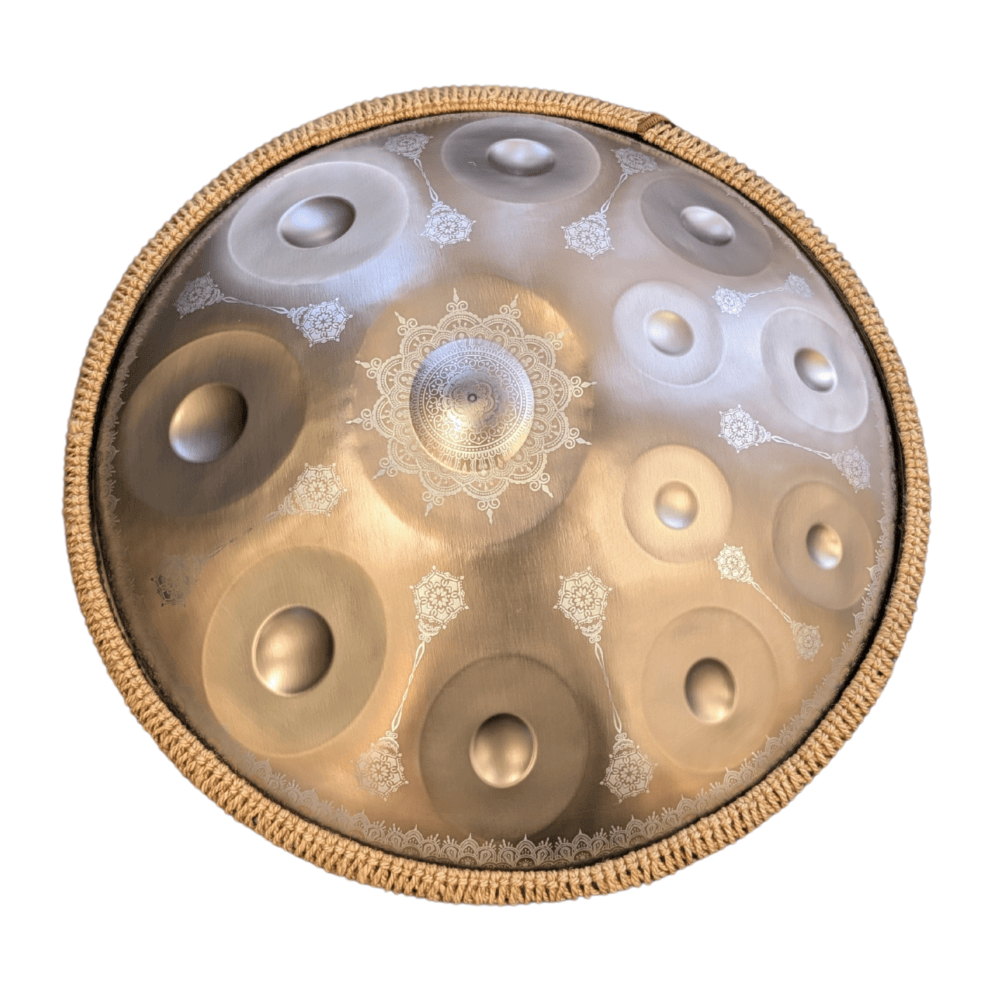
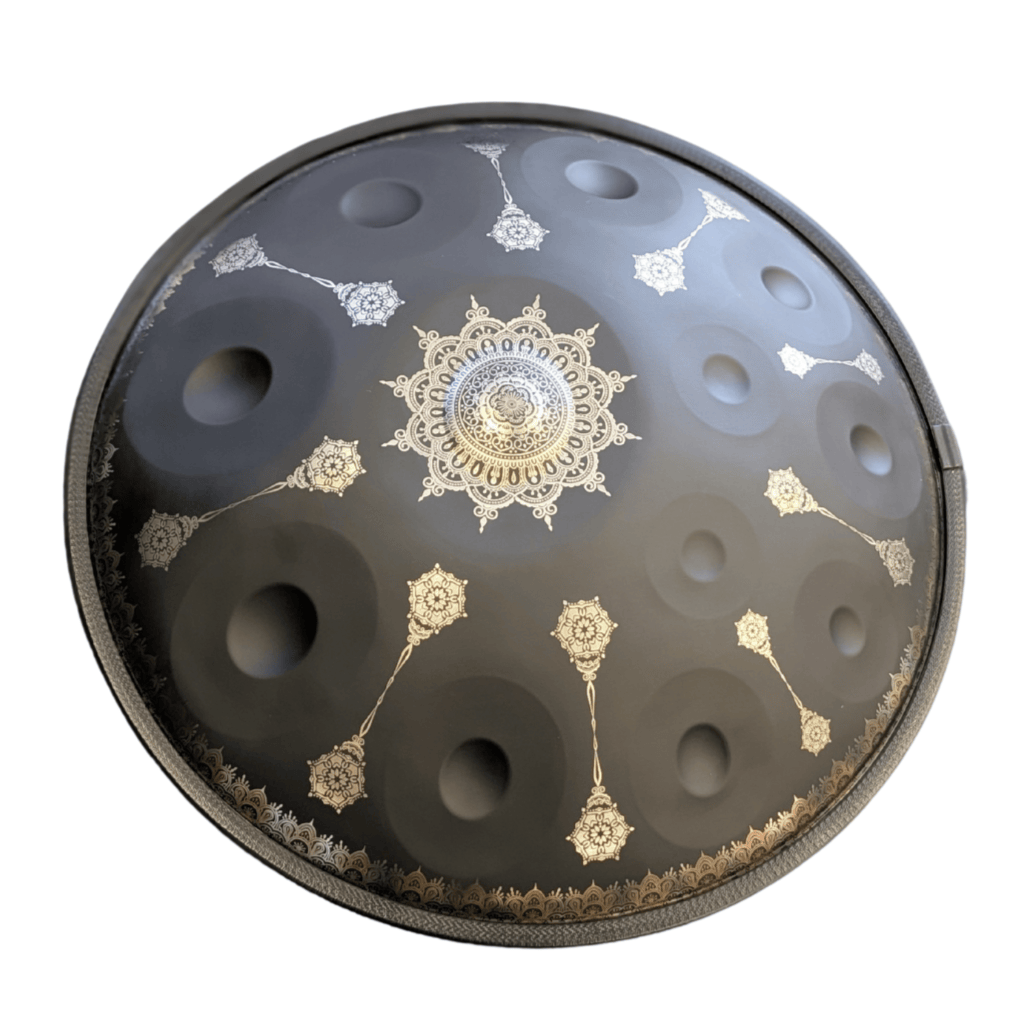
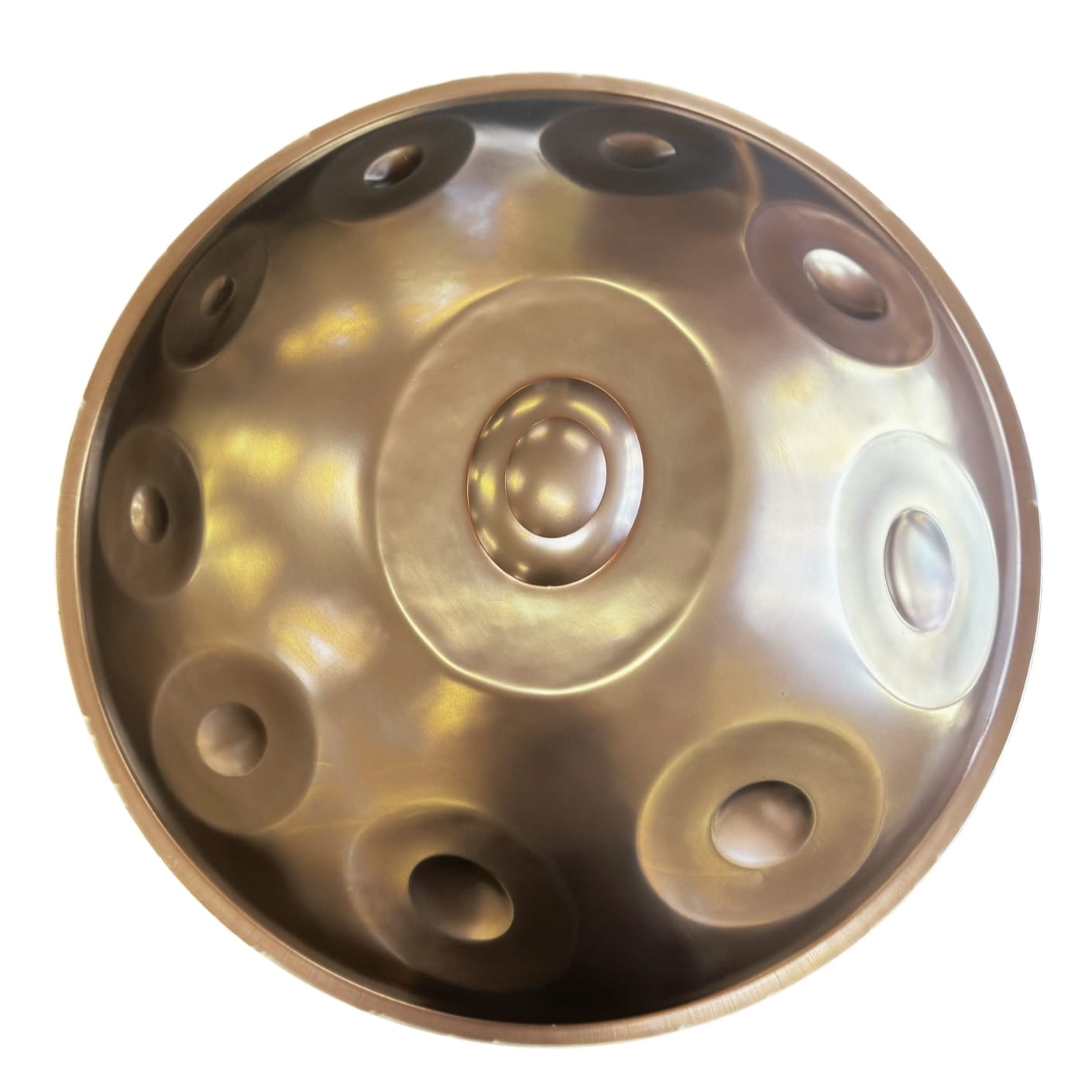
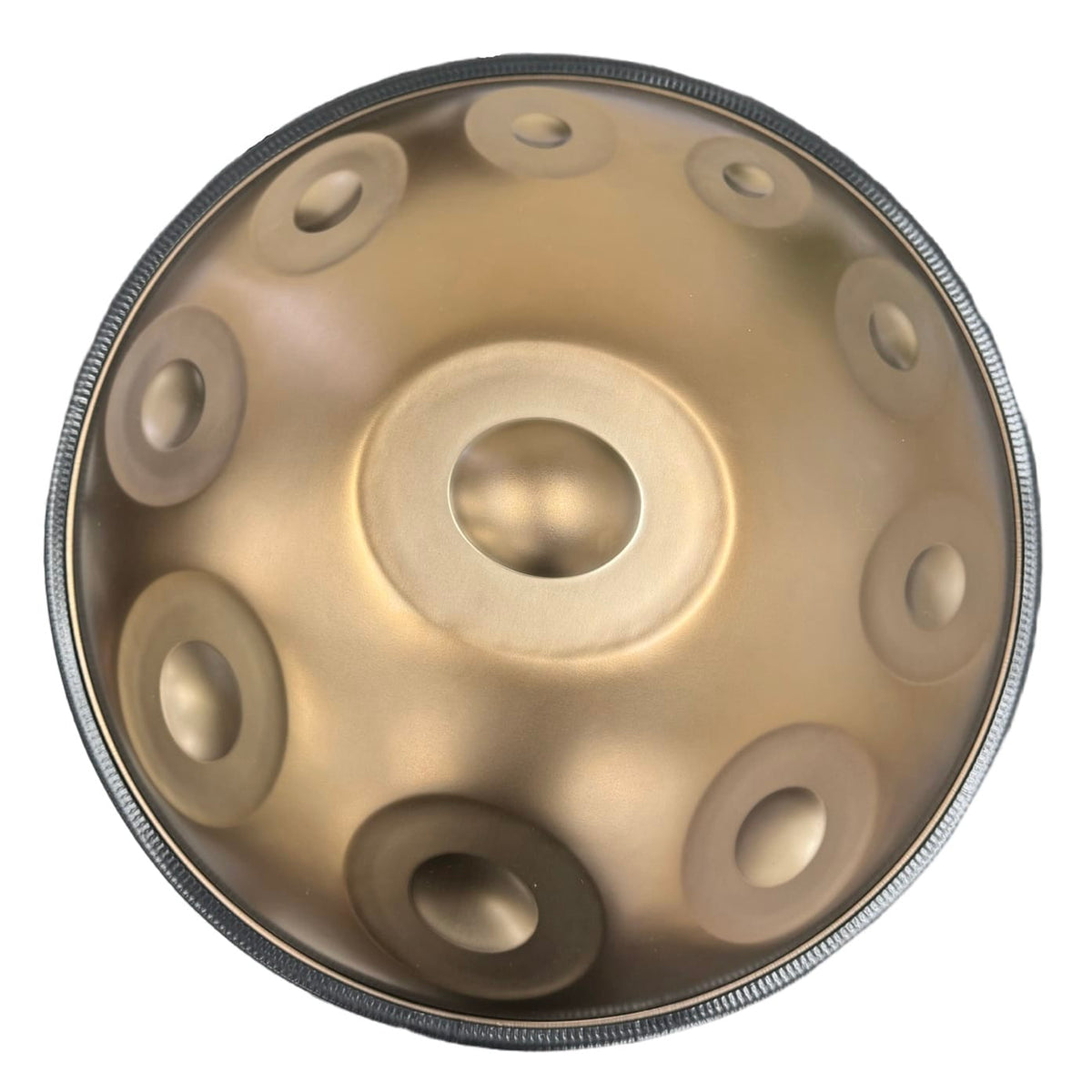
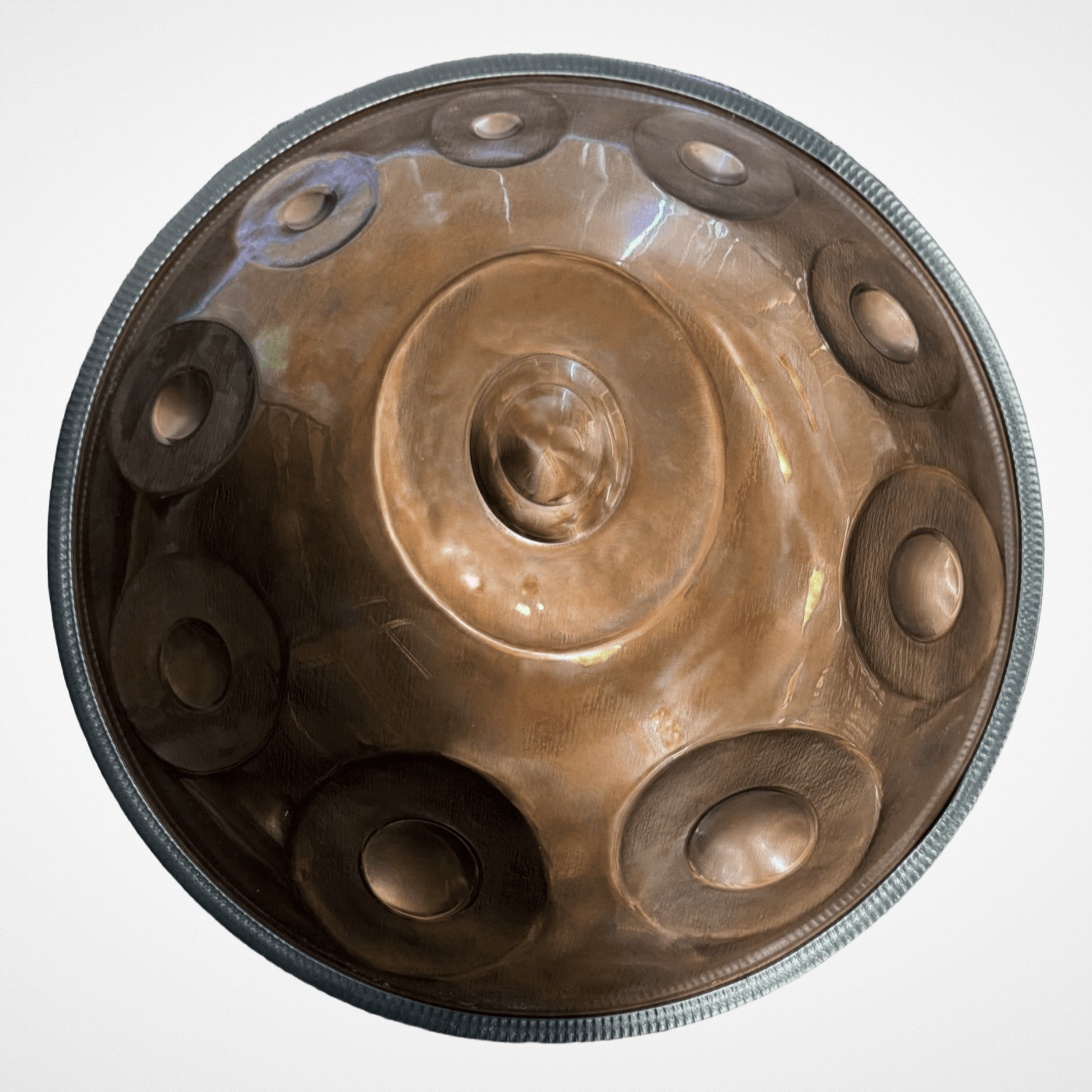
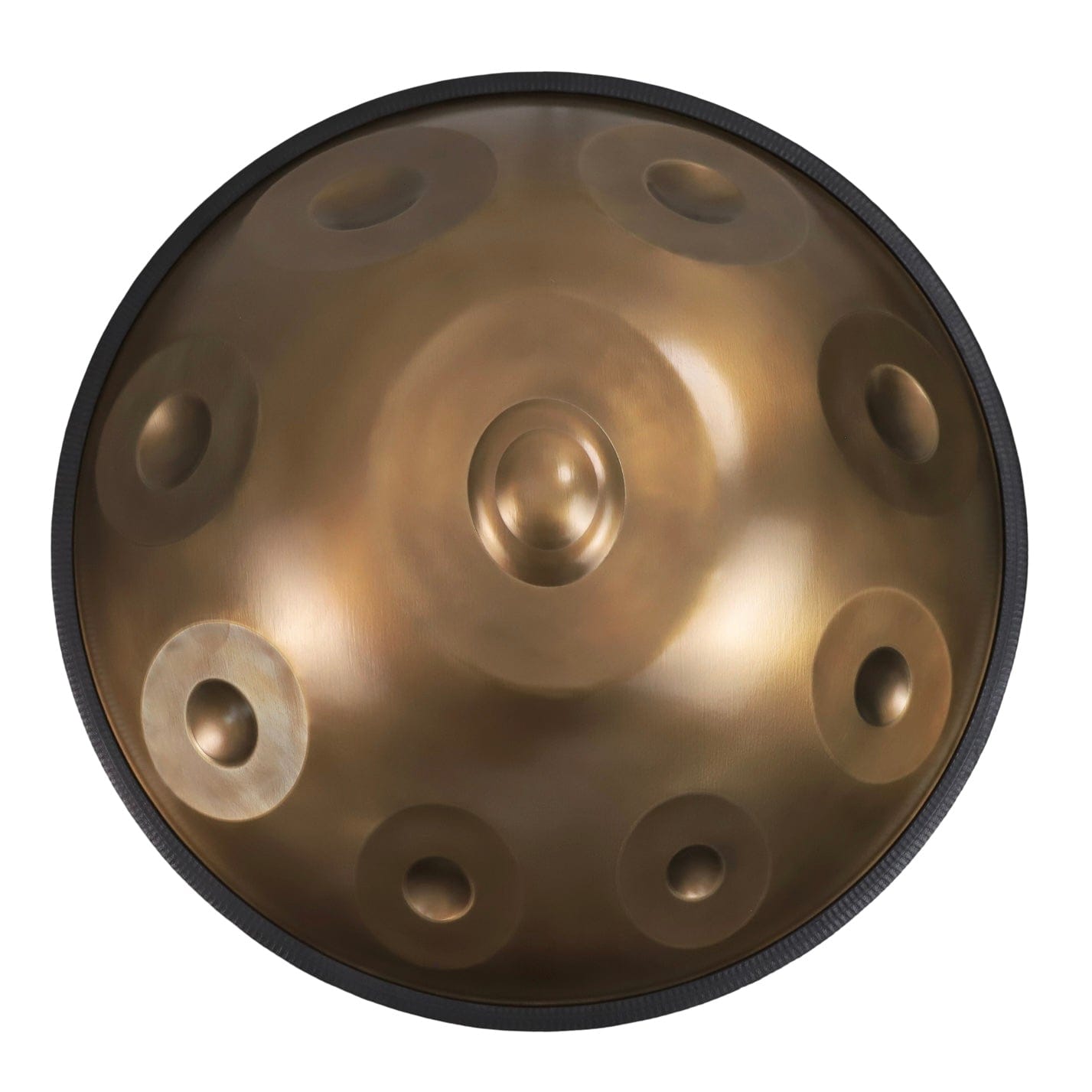
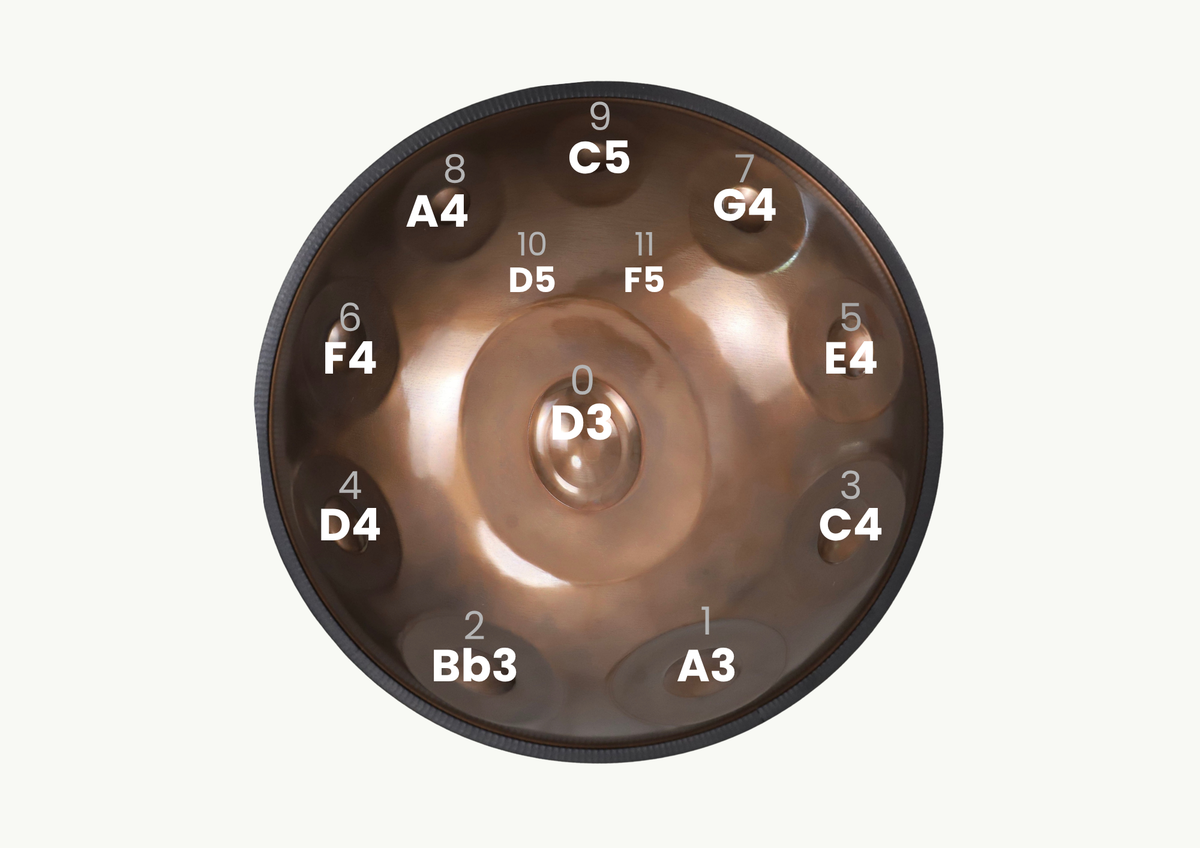
Before you start playing, find out which notes you have. Many of our most popular handpans are D Kurd, with 10 or 12 notes. The diagram below shows the note names (letters) and the numbers often used in online handpan tutorials. 0 is the central note, called the Ding.

My favourite way to position the handpan: keep notes 1 and 2 closest to your body, with 9 (C5) at the top centre, furthest away. This feels particularly straightforward when you're first learning to follow numbered tabs.
Some beginner handpans come with number stickers. If yours doesn't, you can buy small removable number or note stickers from places like Amazon or Officeworks. They're helpful while you learn the layout. You can always remove them when the note positions become familiar.
A quick note: not every handpan has the exact same note layout. If yours is a different scale or has a different number of notes, check your instrument's own note chart first.
2. Give your handpan room to sing
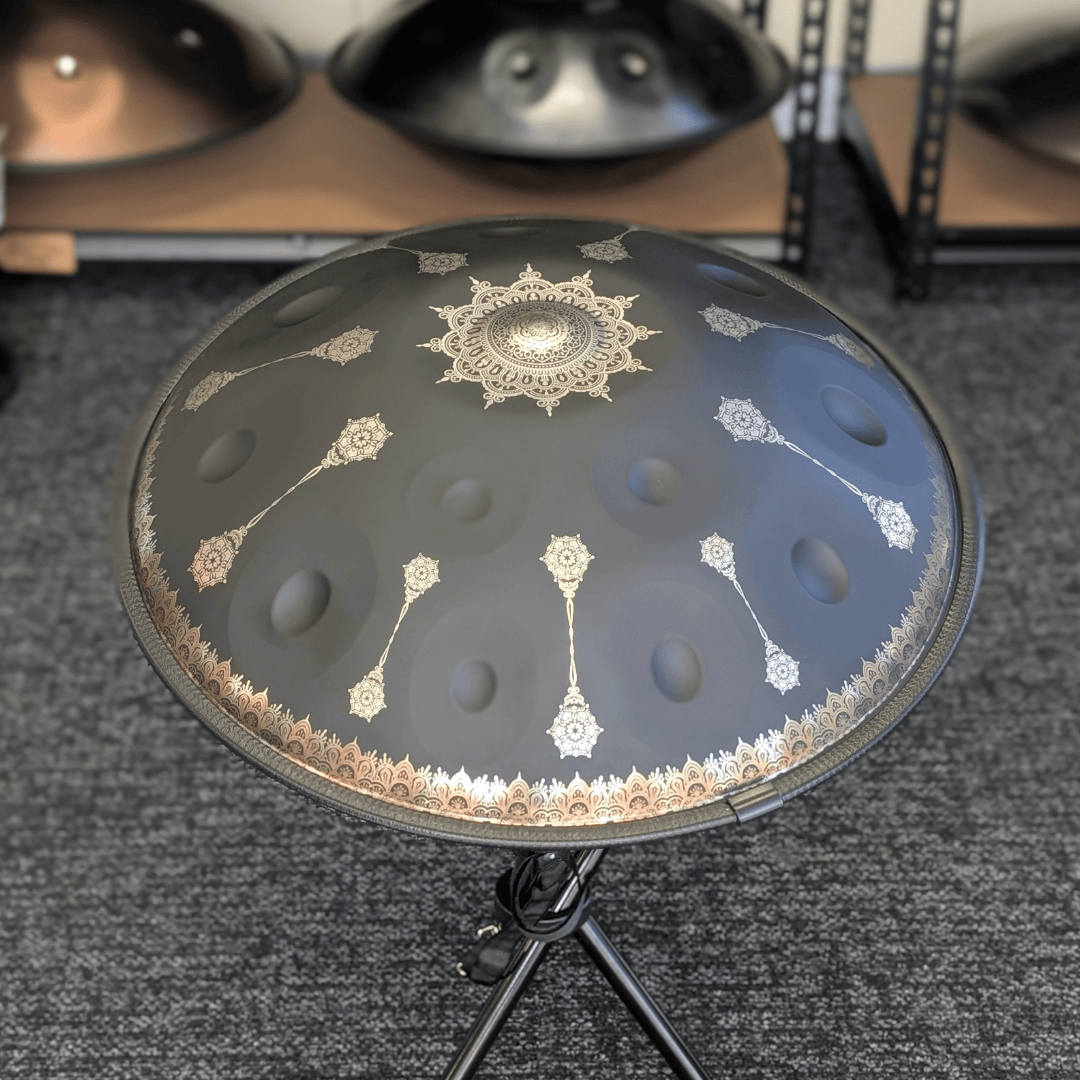
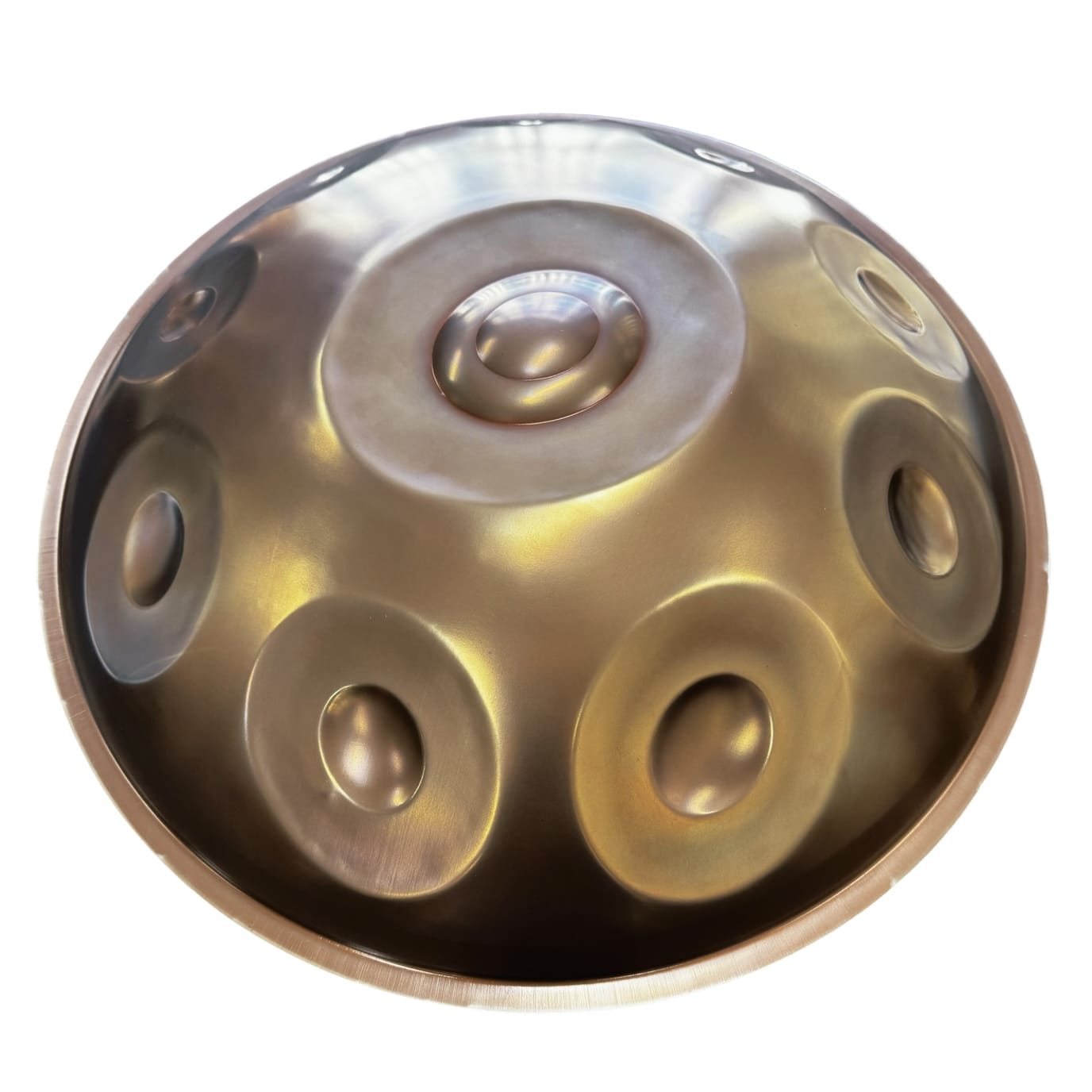
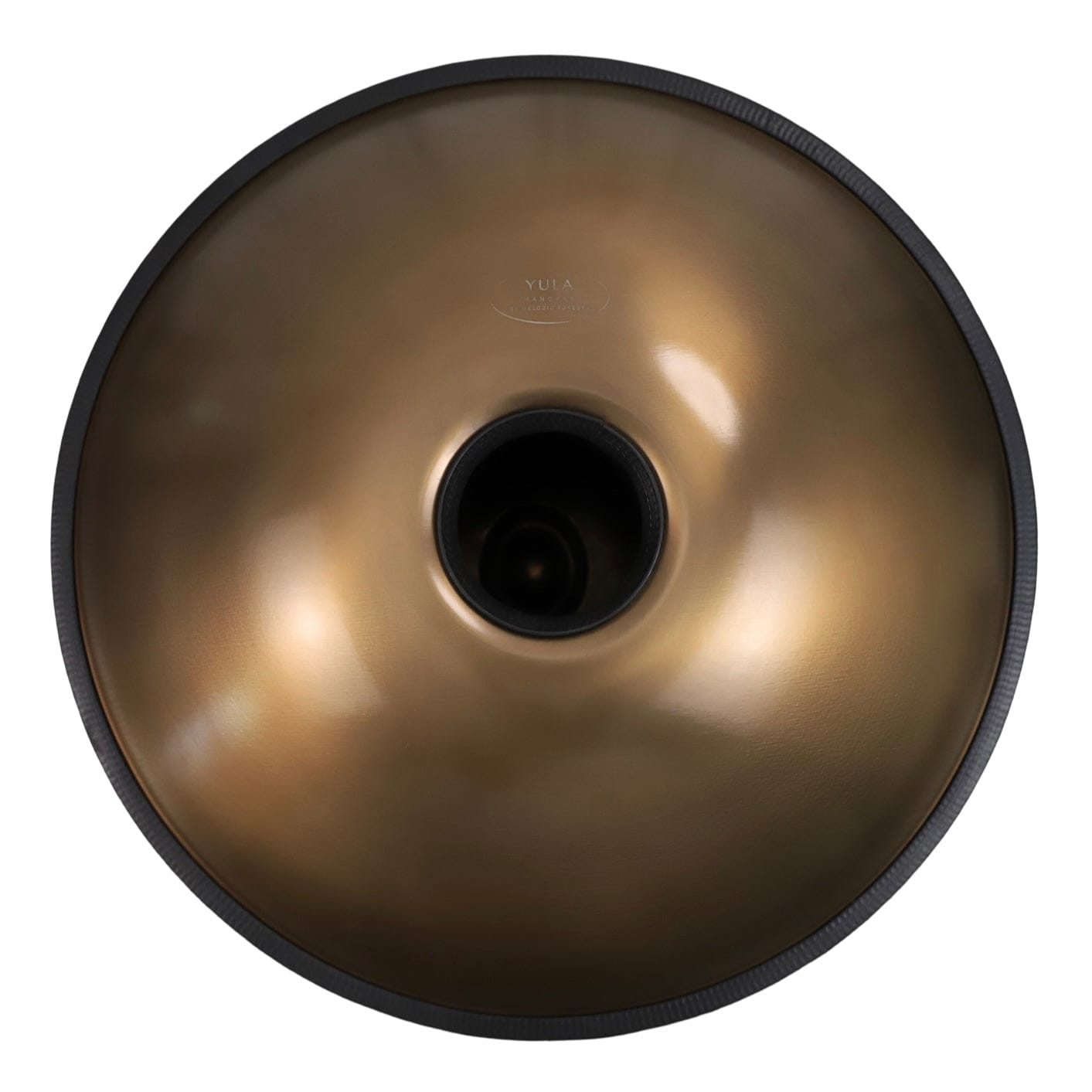
Before worrying about your technique, make sure your instrument can resonate freely. Play with it on your lap or on a proper open handpan stand. The sound hole underneath needs to stay clear.
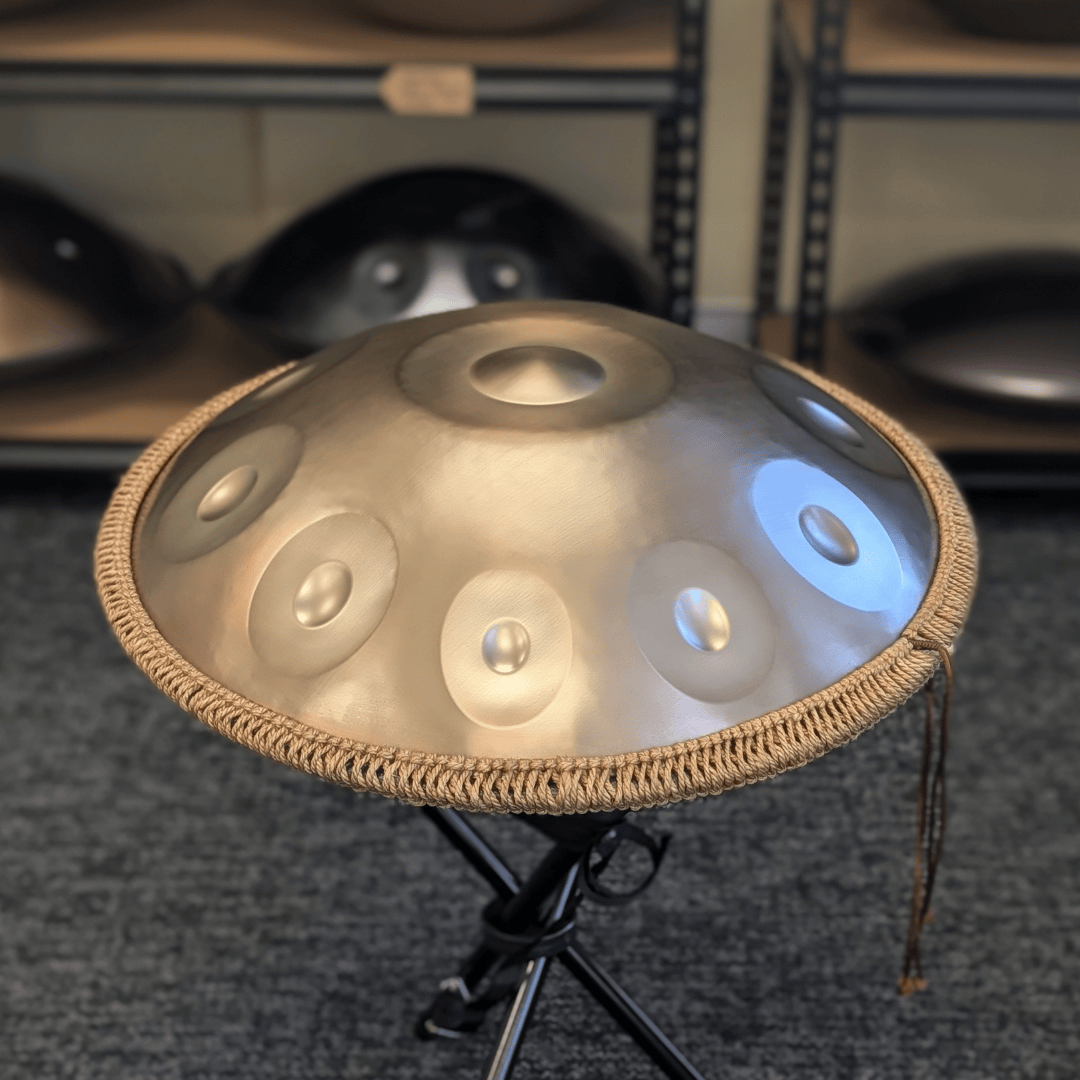
Avoid resting it flat on a table, pillow or other soft surface that blocks the opening. Some stands sold with handpans look more like a little fabric-topped stool. If the cloth sits directly under the sound hole, that is not a suitable playing support — it can muffle a huge part of the sound.
It's a small detail, but it can make a big difference. Sometimes the reason your handpan sounds quiet isn't your playing at all!
3. Find your beautiful handpan sound
Here's the biggest surprise for most beginners: handpan playing isn't about hitting harder.
Don't press. Don't poke. And don't think of it as an ordinary tap where your finger stays on the metal.
Imagine your handpan is a very hot stove. Your finger touches it and immediately springs away. Think of your finger as a tiny whip: a light, quick flick-and-release motion. Stay relaxed and let the handpan ring.

Where should your finger land? Try the inner edge of the tone field, near the highlighted sweet spot in the picture. Avoid striking the small raised centre dimple. Hitting further out tends to give a shorter, more percussive sound; the inner edge helps you bring out a fuller, more resonant note.
Can't get a nice sound yet? That's completely normal. Your fingers are learning movements and coordination that everyday life rarely asks for. For some people it takes a few weeks before the sound feels consistent. Don't fight the instrument or use more force. Practise the same relaxed flicking motion, and your control will improve.
4. Play your first songs
You know where your notes are, your handpan is positioned properly and you've started finding your sound. Now for the fun bit!
Here are two much-loved handpan melodies: Game of Thrones and Interstellar. Follow the numbers in the original practice sheet below. They match the numbered note positions on your handpan.
How to read the sheet: play the numbers from left to right. A group like 678 means playing notes 6, 7 and 8 in succession; notes in brackets, such as (0 4), are played together. Practise just one short phrase at a time.

Game of Thrones
Start with the first, easier version on the left. Once the melody feels comfortable, try the more rhythmic version underneath. Watch a play-along video.
Interstellar
Begin with the repeated centre note (0), then slowly add the paired notes. The rhythm and smooth flow matter much more than speed. Keep it gentle and let each sound ring. Watch a play-along video.
Your first practice goal
Don't try to master everything in one sitting. Spend five or ten relaxed minutes a day getting to know the instrument. Learn where your notes are, practise that quick flicking motion and work through a few notes of a song. That's a wonderful start.
Coming next in Part 2: building a steady rhythm, using both hands and making your first simple handpan patterns.
Made with care by Melodic Forest — helping you enjoy the journey, one note at a time.