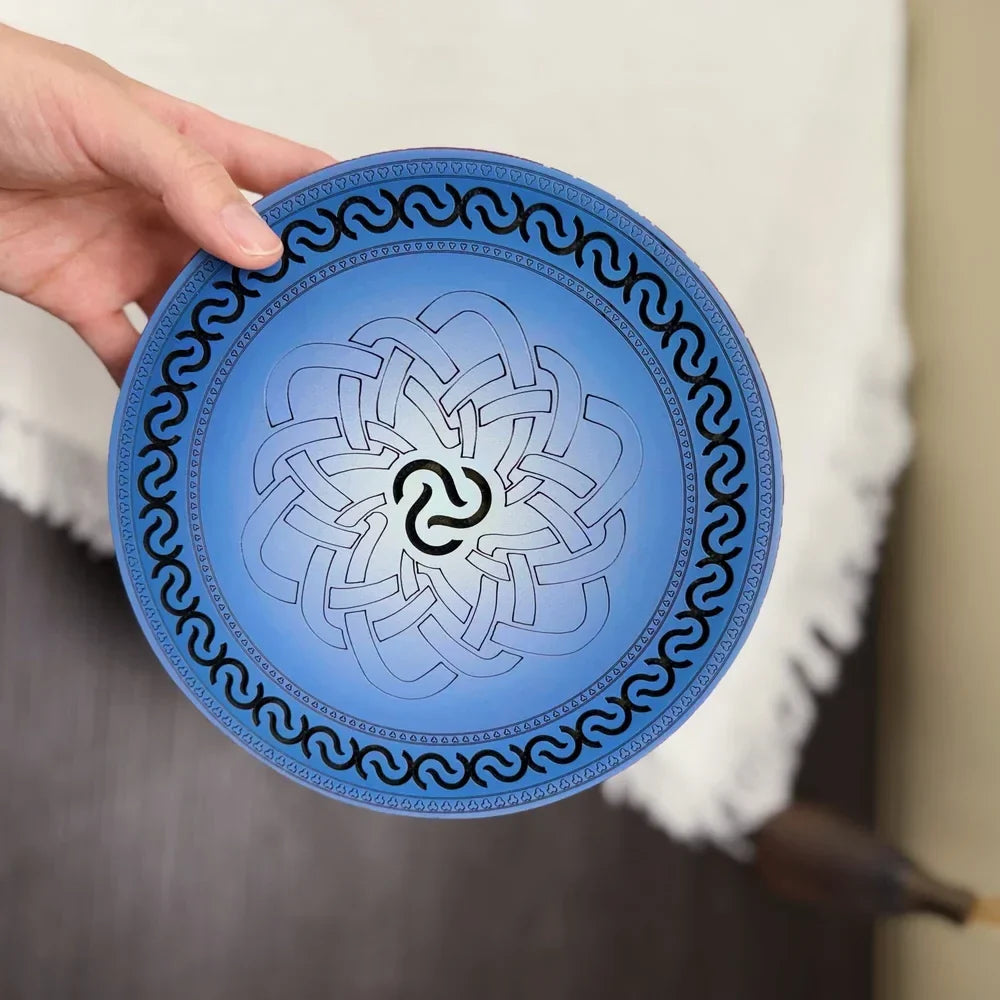
Choosing a Curated Ocean Drum With Confidence
Purchasing an unverified drum off a generic store shelf often leads to harsh rattling or uneven bead movement, whereas an ocean drum hand selected for sound, build quality, and playability provides a predictable and deeply satisfying introduction. Inside the round frame, small beads or shot roll smoothly across tensioned drumheads as you gently tilt it, creating ambient acoustic soundscapes ranging from soft rolling tides to lively crashing surf.
Key Takeaways
- Look for a sturdy frame, secure seams and smooth, even bead movement.
- Natural goat skin can offer a warm, organic response, while synthetic heads are often more consistent in changing conditions.
- A clear head lets players watch the beads move, adding a visual element that many beginners, children and educators enjoy.
- Explore Shop All Instruments for beginner-friendly instruments from Melodic Forest.
At Melodic Forest, we help beginners, gift-buyers, educators and hobbyists understand what makes an instrument enjoyable to return to. Our approach is centred on curated, intuitive instruments and clear guidance, so choosing an ocean drum can feel simple rather than overwhelming.
A well-chosen ocean drum is more than a wave sound effect. It can be a gentle tool for creative play, storytelling, classroom sound exploration and quiet meditation, with each material and construction choice shaping the experience.
How to Choose an Ocean Drum Hand Selected for Tonal Quality
Selecting an ocean drum hand selected for its acoustic properties requires an understanding of how its components harmonise. Rather than relying on mass production standards where voice variations go unchecked, curated instruments undergo individual evaluation. This process ensures that the frame tension, interior fill weight, and head materials produce a balanced acoustic resonance suited for personal relaxation and sound immersion.
When selecting an instrument for gentle sound exploration, listening for clarity across all angles is essential. A curated drum avoids harsh rattling or clumping of interior beads. For readers interested in how gentle sound can fit into relaxation routines, our guide on Discovering Sound Healing: The Science of Relaxation Through Healing Instruments offers a beginner-friendly introduction, while Healthdirect Australia provides broader information on common relaxation techniques.
Sound Mechanics and Dual-Head Designs
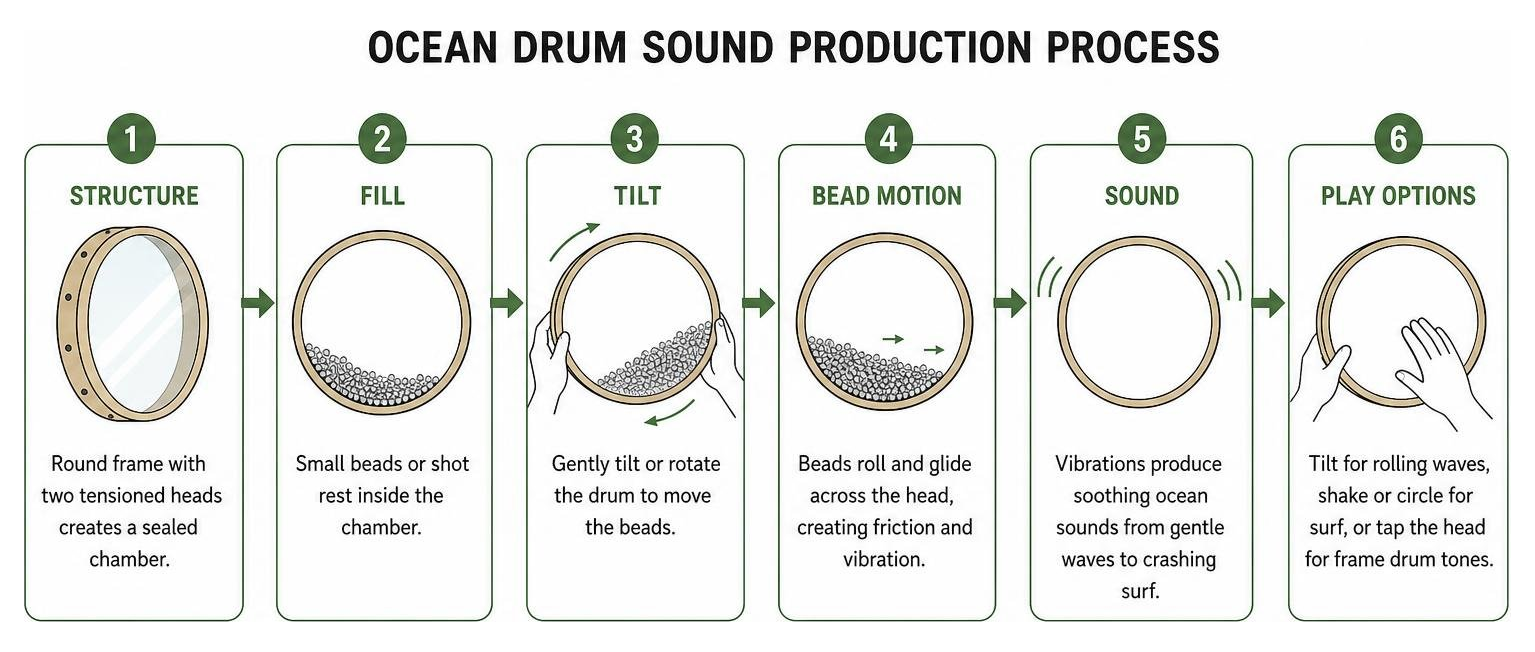
An ocean drum creates its characteristic sea sound through the movement of small steel balls, glass beads, or natural seeds across the interior surface of two tensioned heads. When holding the drum horizontally by its frame, gentle wrist tilting causes the internal fill to glide across the drumhead, recreating the ambient rise and fall of coastal tides. Abrupt stops or faster circular motions produce crashing surf effects, while direct tapping turns the instrument into a classic frame drum.
Many curated models feature a dual-head design that pairs different materials on opposite sides of the frame. For instance, combining a natural skin head with a clear synthetic head gives players two distinct acoustic textures in a single instrument. The natural side provides soft, warm resonance, while the transparent synthetic side produces bright projection while giving players visual feedback as they watch the beads swirl across the chamber.
Evaluating Materials for an Ocean Drum Hand Selected for Warmth
The choice of drumhead material significantly shapes the acoustic tone and maintenance requirements of an ocean drum. Natural goat skin is prized for its organic warmth, deep low end, and soft tactile feeling underhand. However, natural hides respond to atmospheric conditions like humidity and ambient temperature, which can temporarily alter tension and pitch.
Synthetic heads made from durable materials like Mylar provide consistent tension and pitch regardless of climate changes. They offer bright, clear sound projection and require minimal maintenance, making them an ideal choice for busy classrooms or travel.
Sizing, Shell Construction, and Fillable Ports
Frame depth and diameter determine the pitch, volume, and low-end depth of an ocean drum. Compact 12-inch models are lightweight and easy to hold, making them ideal for younger learners or space-conscious settings. Mid-sized 16-inch drums strike a balance between rich bass depth and portable convenience. Larger 18-inch and 20-inch instruments offer deep, immersive resonance and expansive volume that can comfortably fill a room.
| Drum Size | Primary Head Material | Sound Profile | Best Suited For |
|---|---|---|---|
| 12 Inch | Clear Synthetic Mylar | Bright, crisp, high-pitched tide sounds | Classrooms, travel, children |
| 16 Inch | Dual-Head (Goat Skin & Mylar) | Balanced warmth with versatile projection | Beginner musicians, home relaxation |
| 18-20 Inch | Hand-Selected Natural Skin | Deep, resonant bass with long sustaining waves | Group sound sessions, studio work |
Some ocean drums feature a lockable or sealable filling port along the steam-bent wooden frame. This port allows players to customise the volume and response of the instrument by adding or removing internal fill, adjusting the acoustic density to suit quiet personal reflection or group settings.
Handcrafted Quality and Applications for an Ocean Drum Hand Selected
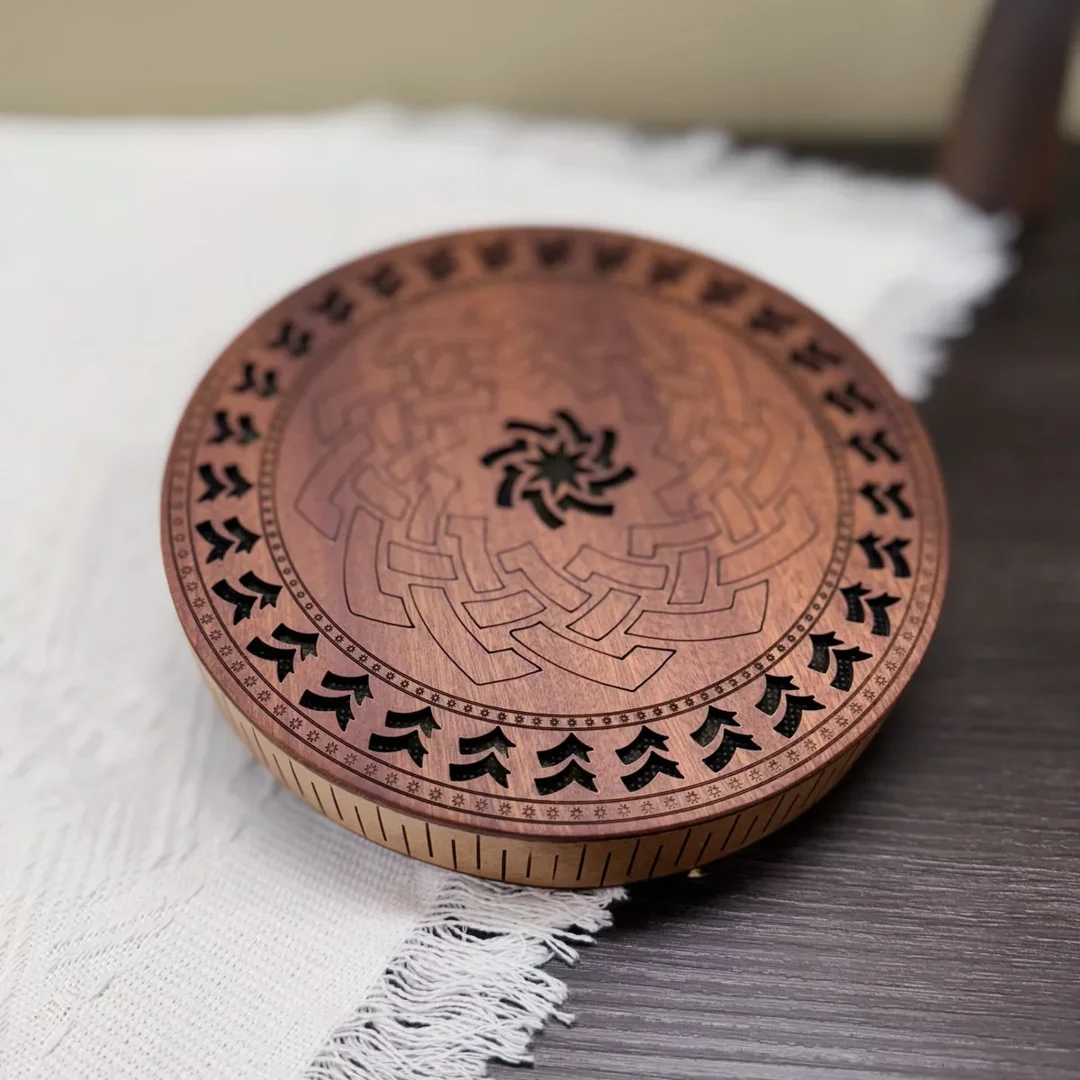
Artisan-crafted ocean drums, such as those made with steam-bent wooden shells, bring unique individual character and visual beauty to any instrument collection. Handcrafted construction preserves natural wood grain patterns and ensures precise joint sealing so that micro steel shot cannot escape during play.
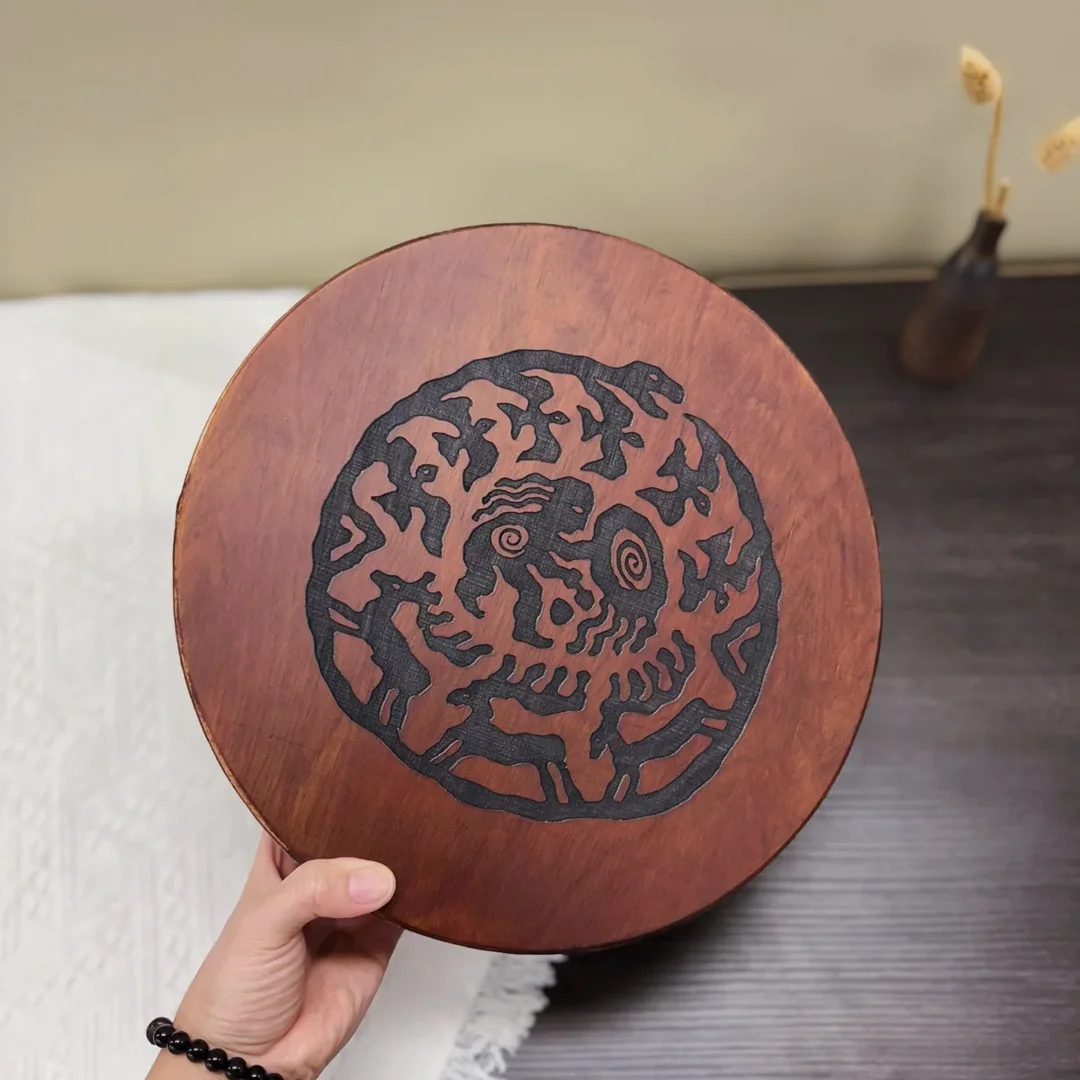
These versatile instruments find natural applications across many environments, from creative sound effects in theatrical storytelling to relaxation aids in guided meditation. Some practitioners believe that gentle oceanic rhythms may help quiet a busy mind during personal reflection. To discover more about nature-inspired acoustic craft, explore our article From Seed to Sound: Instruments of Calm.
Craftsmanship Assessment and Buyer Budget Guide
When evaluating an ocean drum, inspecting physical construction details ensures long-term durability. Check the frame seam for tight construction without gaps, examine the rim finish for smooth handling, and verify that clear plastic heads are free from warping. The internal beads should move freely across the head without catching along the interior edges.
Budget considerations generally reflect material selection and craft detail. Entry-level synthetic ocean drums offer durable, worry-free performance for casual exploration. Mid-range dual-headed models provide a blend of natural warmth and synthetic versatility, while premium handcrafted ocean drums feature hand-selected natural hides and detailed wood finishes. For beginners comparing gentle, low-barriers-to-entry percussion, reading about The Gentle Path to Sound Healing: Why Tongue Drums Welcome Beginners can offer helpful perspective on starting your musical journey.
Practical Solutions and Reassurance
Finding the right ocean drum involves pairing your sound preferences with practical playing needs. We encourage beginners to start with instruments that feel comfortable to hold and easy to maintain, ensuring a rewarding relationship with music-making from day one.
- Explore our range of curated instruments by browsing Shop All Instruments.
- Read detailed care guides and acoustic advice at our Buying Guide & Product Care hub.
- Learn more about selecting intuitive percussion with our guide on how to find your perfect tongue drum.
- Connect with dedicated tutors and educational guidance via Find a Teacher.
- Have questions about choosing the right instrument? Reach out directly via Contact Us.
Our team at Melodic Forest offers hand-tested instruments, direct advice, maker support, and warranty guidance to support you through every stage of your musical discovery.
Frequently Asked Questions About Ocean Drums
How does an ocean drum replicate the sound of water?
An ocean drum replicates marine soundscapes through small steel balls, glass beads, or natural seeds rolling freely across the internal drumheads. As the instrument tilts, the beads create friction against the tensioned head material, generating soft rolling tide sounds or sharp crashing waves depending on tilt speed and angle.
What is the advantage of an ocean drum with a fillable port?
A fillable port allows players to customise the volume, tone, and response of their instrument. By adding or removing internal beads through a sealable opening in the frame, users can adjust the density of the filling to create subtle whispers for quiet environments or richer tones for larger spaces.
Is natural goat skin or synthetic head material better for beginners?
Synthetic drumheads offer consistent tension and brightness that remain unaffected by humidity, making them simple to maintain for beginners and travel. Natural goat skin produces a softer, warmer tone, though it requires gentle protection from moisture and extreme temperature changes to maintain ideal head tension.
How do I care for my ocean drum to maintain its sound quality?
Store your ocean drum in a temperate indoor environment away from direct sunlight, excess heat, or extreme moisture. Wiping down the frame and heads with a dry, soft cloth after use removes natural skin oils and keeps transparent panels clear for visual enjoyment.
Can an ocean drum be played with hands or mallets?
Yes, an ocean drum functions both as an ambient wave effect generator and as a double-sided frame drum. Striking the head gently with fingers, palms, or soft mallets creates warm, rhythmic acoustic percussion alongside the internal roll of the beads.





Leave a comment
This site is protected by hCaptcha and the hCaptcha Privacy Policy and Terms of Service apply.