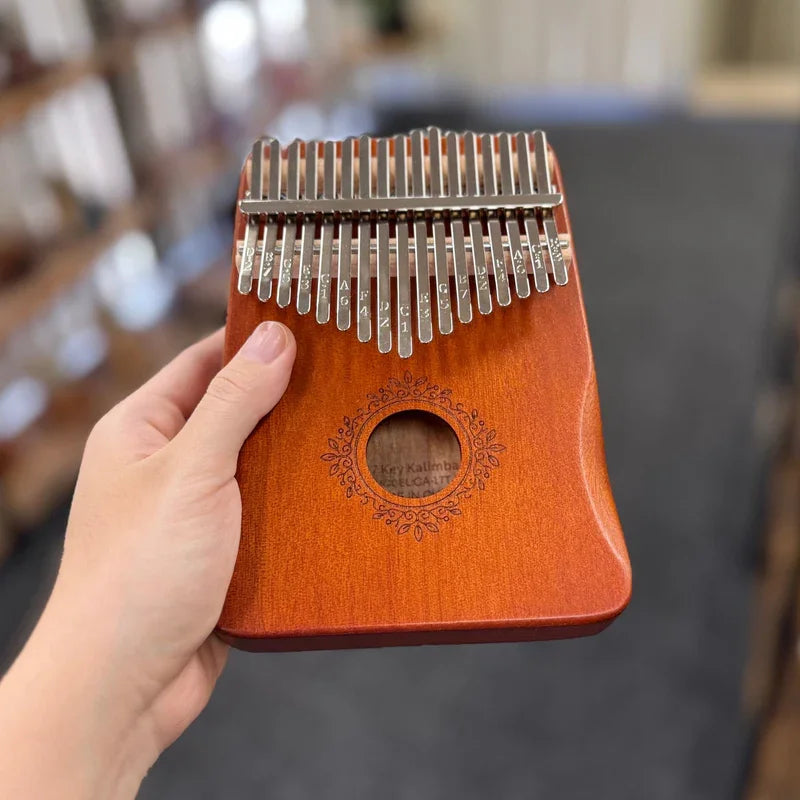
Using a Kalimba for Music Therapy and Relaxation
For music therapy, a kalimba may be used by qualified therapists for simple, participant-led musical exploration, while for relaxation it can offer gentle tactile and acoustic engagement. Choose an instrument with a comfortable grip, suitable tine spacing and a sound that feels manageable for the participant or setting. A rushed purchase, however, can leave practitioners with a thumb piano that feels awkward in the hands, sounds sharper than anticipated or lacks the tactile warmth needed for calming engagement. At Melodic Forest, we provide a more thoughtful, personalised experience where every instrument is carefully selected, accurately tuned and available to test in person at our Sydney showroom before you make a decision.
Key Takeaways
- Kalimbas may support relaxation, creative enjoyment and non-verbal musical engagement when used appropriately.
- Pentatonic and other intuitive layouts can make exploratory playing feel approachable.
- Solid-body kalimbas and resonant sansulas offer different tactile and acoustic experiences.
- Practitioners should select instruments according to the participant's preferences, mobility and sensory needs.
- Explore the Kalimbas Australia Collection or review the Kalimba 17 Key Classic Natural.
We are Melodic Forest, an Australian-owned specialist retailer of intuitive musical instruments established in 2020. Our focus is on helping people find character-rich instruments that feel comfortable, engaging and suitable for their intended relaxation or wellness settings, while always clarifying that we do not provide clinical therapy or medical services.
We believe that everyone deserves access to supportive product guidance, dependable instrument setup and the opportunity to experience acoustic resonance firsthand. Whether you are exploring gentle musical mindfulness or looking for tactile tools for supportive care, our team is dedicated to offering honest advice, after-sales care, and a welcoming environment to support your musical journey.

Why This Is Important
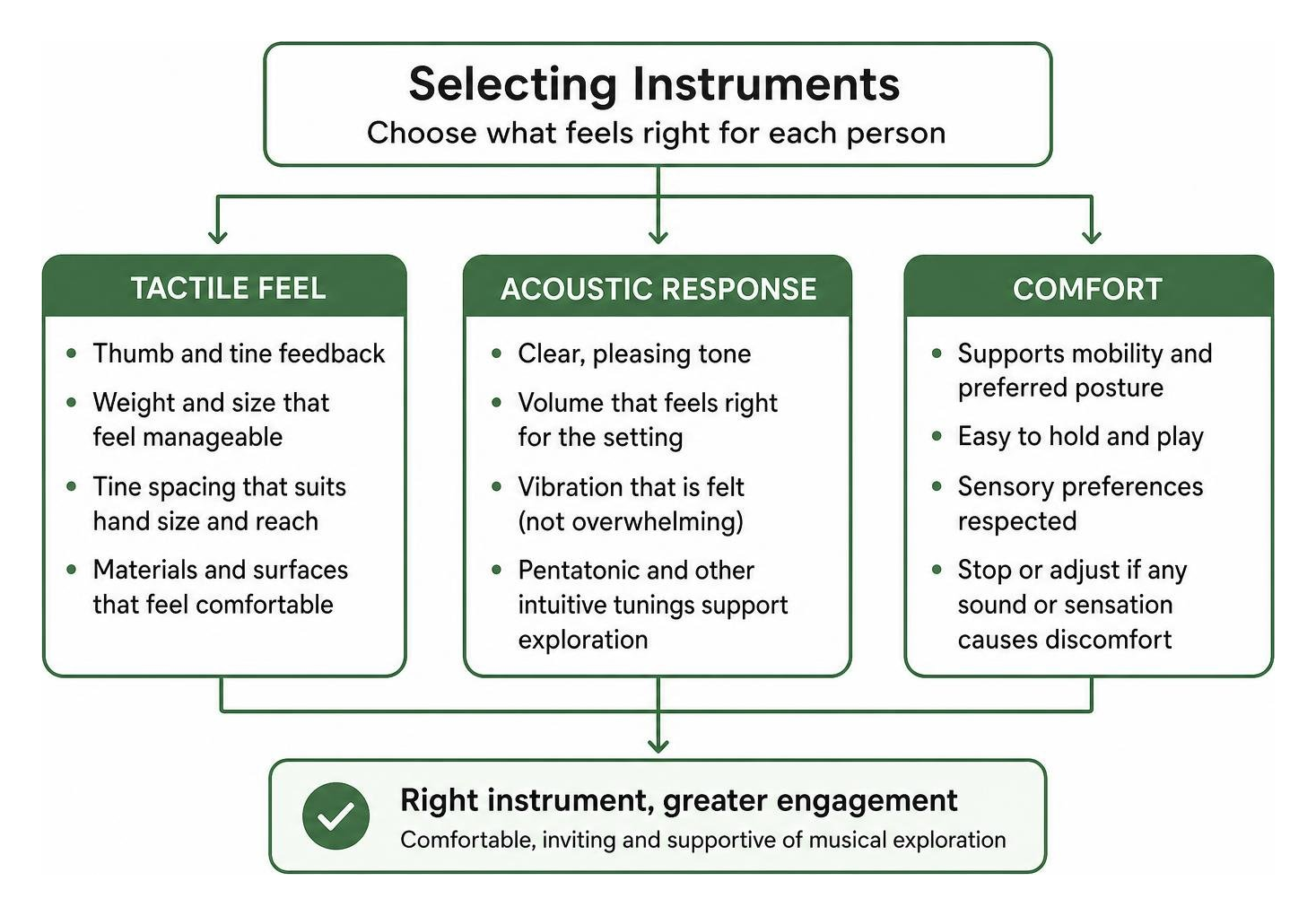
The choice of instrument can significantly influence a participant's comfort, emotional safety and willingness to engage in musical exploration. When introducing instruments into wellness spaces or clinical environments, using a poorly suited model can lead to frustration or sensory overload. If an instrument is too heavy, excessively loud, awkwardly spaced for smaller hands or difficult to produce a clear note on, the practitioner may miss valuable opportunities to observe subtle motor responses and spontaneous creative expression. Selecting the correct acoustic profile and physical build ensures the interaction remains an inviting, low-pressure experience.
In Australian professional practice, maintaining clear boundaries around informed consent, participant comfort, and sensory regulation is essential. Practitioners working in supportive care contexts must monitor individual fatigue and respect when a client wishes to pause or decline an activity. Melodic Forest is a specialist retailer rather than a registered medical or therapy provider, and we always emphasise that musical activities should complement, rather than substitute, professional healthcare interventions. Anyone with underlying medical or mental health concerns should consult a qualified healthcare professional, seek advice through the Australian Government's mental health and wellbeing resources, or consult a registered music therapist for clinical care plans.
Long-term practical considerations also play a vital role when investing in instruments for private practice, community centres or home relaxation. Selecting well-crafted instruments made from durable tonewoods ensures they withstand regular handling while maintaining accurate tine alignment. Having access to after-sales support and reliable tuning guidance means an instrument can adapt over time as a participant's familiarity and confidence grow, serving as a dependable tool for continuous creative enjoyment.
Common Challenges or Questions
Navigating the various types of intuitive instruments can be confusing for practitioners who are new to melodic percussion. Understanding key acoustic and mechanical terms helps demystify the selection process and ensures the chosen instrument aligns with the participant's sensory needs:
- Pentatonic tuning: A five-note scale arrangement that removes semitone intervals, creating an open soundscape where notes harmonise naturally regardless of the order played.
- Vibro-tactile feedback: The gentle physical resonance transferred from the metal tines through the body of the instrument directly into the player's hands, providing grounding sensory input.
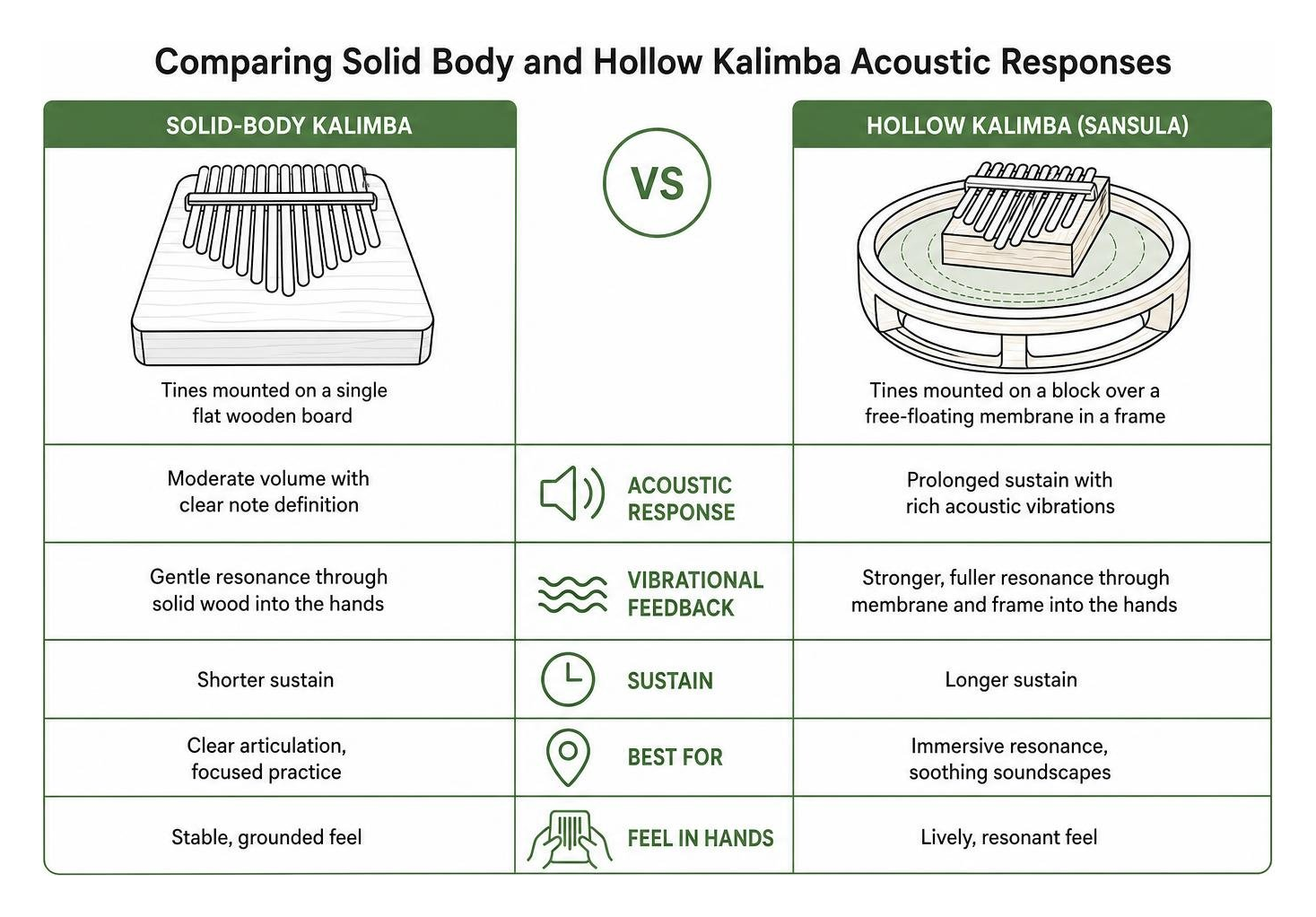
- Solid-body kalimbas versus resonant sansulas: A solid-body kalimba features tines mounted onto a single flat block of wood (such as a 17 Keys Flat Board Maple Kalimba Blue Whale), offering moderate volume and clear note definition. In contrast, a sansula mounts a small wooden block onto a free-floating membrane inside a frame, producing prolonged sustain and rich acoustic vibrations.
- Tine spacing and ergonomic profile: The physical distance between the metal keys dictates how easily thumbs can navigate individual notes without accidentally striking adjacent tines.
- Adapting activities responsibly: Facilitators can offer open-ended sound exploration or turn-taking games without framing the activity as formal clinical therapy.
- Professional boundaries: While intuitive instruments are beginner-friendly, structured clinical interventions designed to address diagnosed functional deficits must be guided by accredited music therapists.
Using the Kalimba in Motor and Cognitive Rehabilitation
When utilised under the guidance of qualified therapists, the kalimba can serve as a motivating medium for practising fine motor coordination, finger isolation and bilateral thumb movement. The gentle resistance of the spring steel tines offers immediate tactile feedback, encouraging deliberate motor planning without requiring the high physical exertion often associated with larger acoustic instruments. Participants engaging in supportive cognitive or communication exercises can use simple turn-taking patterns, such as musical mirroring or rhythmic calls and responses, to practice focus and non-verbal interaction.
The kalimba also offers rich educational and cultural value. Rooted in traditional African instruments such as the mbira and karimba, thumb pianos carry centuries of musical history that can foster cultural appreciation, storytelling and shared pride in diverse classroom settings. For general creative sessions, instruments such as the Kalimba 17 Key Hluru Mahogany Lotus provide an accessible platform for participants of all backgrounds to explore melodic patterns, express feelings non-verbally and enjoy collaborative music-making.
What to Expect at Melodic Forest
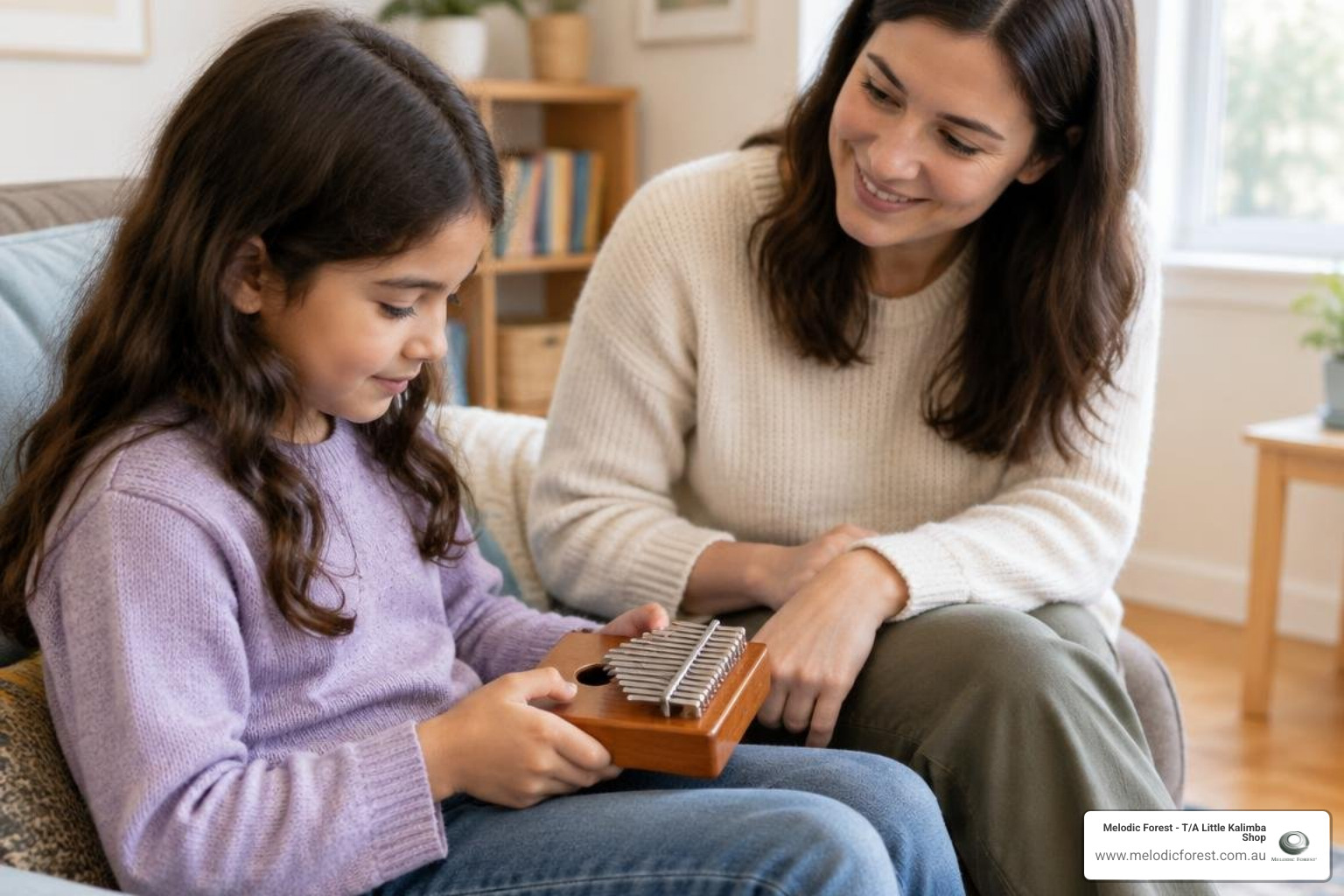
At Melodic Forest, we believe that choosing an instrument should be a calm, unhurried and informative experience. In our Sydney showroom located in Villawood, NSW, visitors can test our range in person to feel the tactile differences between distinct tonewoods, tine tensions and resonance styles. We take the time to explain the nuances between solid flat-board instruments, hollow soundbox models and membrane-mounted sansulas, ensuring you find an instrument that matches your acoustic environment and personal comfort.
Our curated catalogue prioritises flagship categories such as handpans and steel tongue drums, alongside accessible lyre harps, singing bowls and an extensive selection of thumb pianos. We inspect and hand-test our instruments to ensure accurate tuning, smooth tine edges and solid construction. Beyond the checkout, we provide comprehensive product education, free online tutorials, warranty assistance and connections to trusted handpan tuners and makers across Australia. Please note that Melodic Forest does not operate an in-house repair workshop and does not sell adaptive or digital tools.
When to Get in Touch or Take Action
You may wish to reach out to our team before purchasing if you need personalised assistance comparing key counts, tine spacing, overall weight or acoustic volume across different models. If you are selecting an instrument for a specific group setting, such as an aged-care facility, early learning space or private wellness studio, we can help identify options that balance durability, gentle resonance and ease of handling.
For any specific clinical assessments, motor rehabilitation protocols or mental health treatment plans, we encourage you to consult an accredited music therapist or registered healthcare practitioner. When you are ready to explore our instruments, you are welcome to visit our Sydney showroom during opening hours (Monday to Saturday 9am to 5pm) or contact us online for tailored product advice.
Practical Solutions and Reassurance
Introducing an intuitive instrument into your personal relaxation routine or community group should feel empowering, creative and accessible. By keeping initial interactions low-pressure and focused on comfort, you can create an inviting space for sound exploration. Consider the following steps when getting started:
- Identify the participant's physical comfort, grip preferences and sound sensitivity before selecting an instrument.
- Choose between a solid-body model for clear, focused note articulation or a resonant sansula for ambient, sustained vibration.
- Introduce the instrument gently, allowing the individual to explore the tines freely at their own pace without expectations of performance.
- Pair musical exploration with deep breathing or quiet listening to foster a restful environment.
- Consult an accredited music therapist or healthcare professional whenever addressing clinical or therapeutic goals.
- Explore the wide variety of beginner-friendly models available in our Kalimbas Australia Collection or try the Kalimba 17 Key Classic Natural.
- Browse our Shop All Instruments collection for handpans, tongue drums, lyre harps and other sound-oriented instruments.
- Reach out directly to our team via Contact Us for dedicated instrument advice.
- Read through helpful maintenance and selection guides on our Buying Guide & Product Care hub.
- Connect with experienced instructors across the country using our Find a Teacher directory.
- Visit our Sydney showroom in Villawood, NSW, to test instruments in person and compare tactile and acoustic responses.
Frequently Asked Questions About the Kalimba for Music Therapy and Relaxation
How Does a Kalimba for Music Therapy Differ from Complex Melodic Instruments?
A kalimba features a compact layout, tactile steel tines and an intuitive thumb-plucking technique that requires minimal physical exertion. Unlike complex orchestral or keyboard instruments that often demand rigorous finger independence and extensive theoretical training, a kalimba allows players to generate clear, consonant notes almost immediately. This straightforward design makes it particularly approachable for open-ended creative exploration, gentle mindfulness sessions and low-pressure engagement under the guidance of a qualified practitioner.
What Makes Pentatonic Tuning Useful for Relaxation-Oriented Activities?
Pentatonic tuning arranges five distinct pitches per octave in a manner that eliminates harsh dissonances, meaning any combination of notes played together naturally harmonises. For individuals seeking relaxation or those who feel intimidated by formal music theory, a pentatonic scale creates an environment where there are no jarring mistakes. While this layout can foster confidence and a pleasant auditory backdrop, it is an acoustic characteristic rather than a clinical treatment and should not be seen as a guaranteed therapeutic outcome.
How Can Practitioners Introduce Resonant Sansulas?
Practitioners can introduce a resonant sansula by holding the instrument comfortably and plucking a few central tines slowly, inviting the participant to observe the warm, sustained tone and subtle air resonance. Because the vibrating membrane creates a distinctive tactile sensation, facilitators should always offer participation as an optional experience and check in regularly regarding sensory comfort. If the individual feels overwhelmed by the sound or vibration, the activity should be paused immediately.
Which Kalimba Key Count Is Recommended for Clients with Motor Challenges?
There is no single key count that suits every individual with motor challenges, as physical comfort depends on hand size, grip strength and range of motion. An 8-note or 9-note model typically features wider tine spacing and a lighter frame, which may feel easier to hold and navigate for those with limited dexterity. Conversely, a standard 17-note kalimba provides a broader melodic range for players who have greater finger mobility. Trying different models in person can help determine the most comfortable match.
Where Can Practitioners Source Instruments for Supervised Musical Engagement in Australia?
Practitioners in Australia can explore a wide variety of inspected, high-quality intuitive instruments through Melodic Forest's online catalogue or by visiting our Sydney showroom in Villawood, NSW. We provide hands-on testing, fast domestic dispatch, dedicated after-sales support and warranty assistance to help you select reliable tools for community and personal use. For any specific therapeutic applications, practitioners should collaborate with accredited healthcare and music therapy professionals.




Leave a comment
This site is protected by hCaptcha and the hCaptcha Privacy Policy and Terms of Service apply.