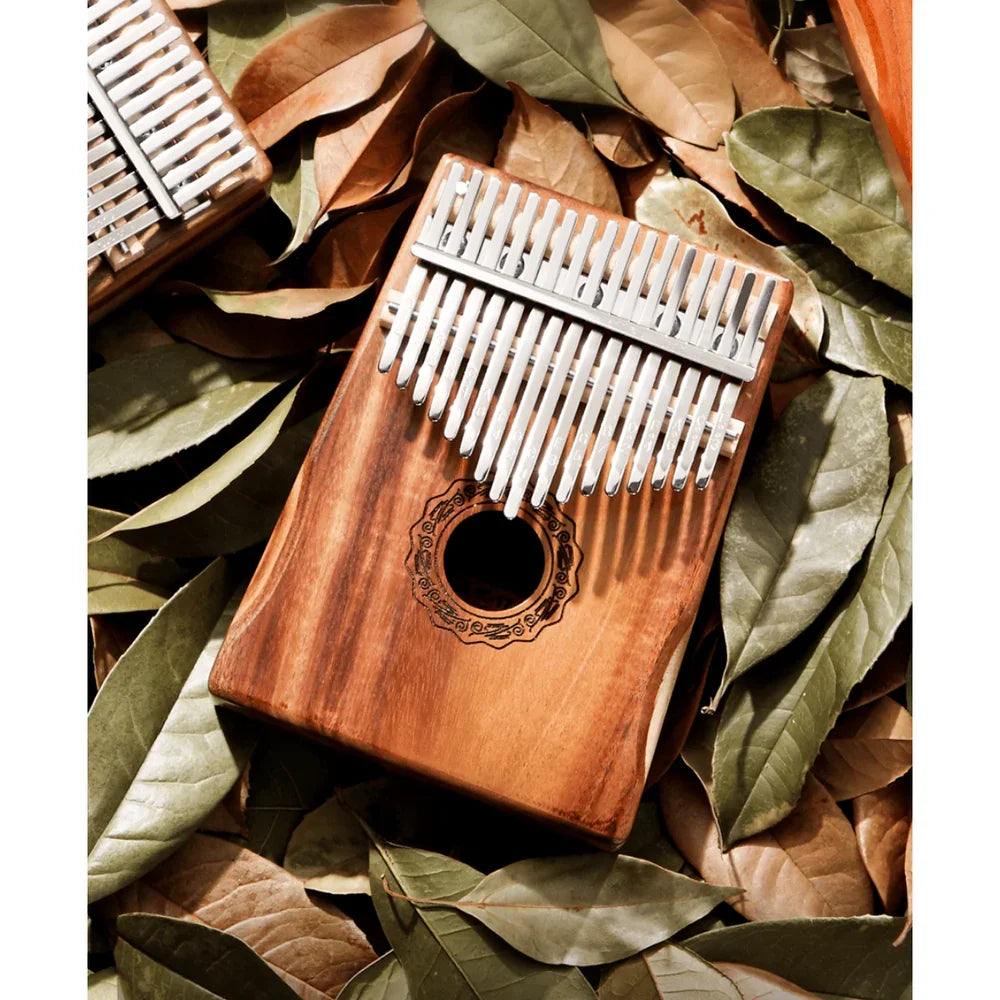
The Quickest Way Into Music: Easy Kalimba Songs with Letter Notation
If you've been looking for easy kalimba songs letters to get started on, you're in the right place. The kalimba is one of the most beginner-friendly instruments around, and letter-based notation makes it even simpler. You don't need to read sheet music. You just match the letters on the tabs to the letters engraved on your tines, and play.
Here are some of the most popular easy kalimba songs available in letter notation right now:
| Song | Difficulty | Why It's Great for Beginners |
|---|---|---|
| Twinkle Twinkle Little Star | Very Easy | Slow, repetitive, familiar melody |
| ABCDEFG (Alphabet Song) | Very Easy | Same tune as Twinkle Twinkle |
| You Are My Sunshine | Easy | Uplifting, simple phrase patterns |
| Happy Birthday | Easy | Short and very well known |
| Over the River and Through the Woods | Easy | Steady rhythm, minimal jumps |
| Birds of a Feather (Billie Eilish) | Easy-Moderate | Modern pop, simplified arrangement |
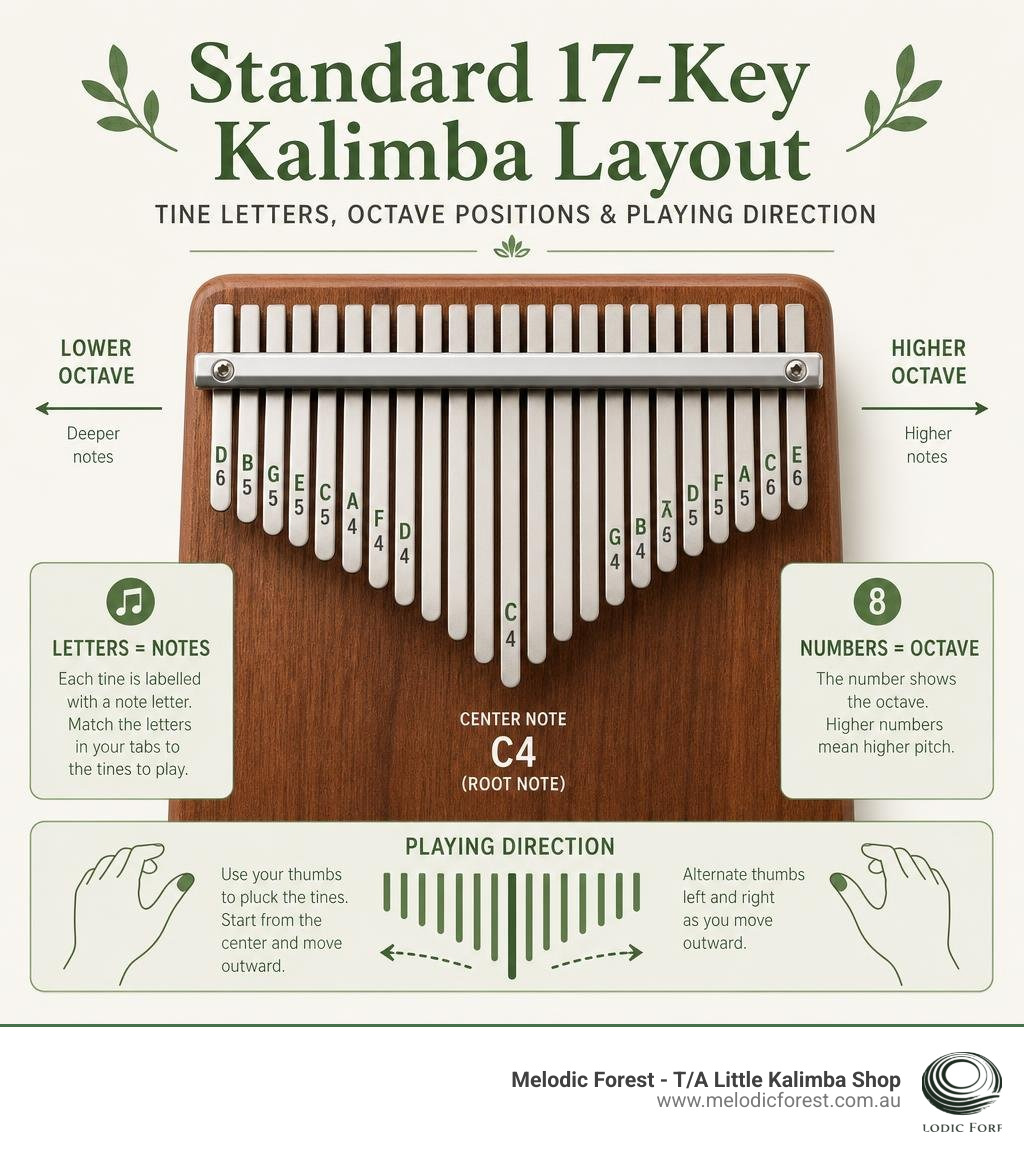
Letter notation works like this: each tine on your kalimba is labelled with a note letter (C, D, E, F, G, A, B). A tab simply lists those letters in the order you play them, from bottom to top. That's it.
The appeal of the kalimba is hard to overstate. With over 10,000 searches for easy kalimba notes on Pinterest in a single day, and individual song tabs racking up hundreds of thousands of views online, it's clear that people all over the world are falling in love with this little instrument. And for good reason. It's small enough to fit in a bag, gentle enough to play anywhere, and approachable enough that you can be playing real songs within your first sitting.
At Melodic Forest, we believe music should feel welcoming, not overwhelming. Whether you've never played an instrument before or you're coming back to music after years away, the kalimba is a beautiful place to start.
Understanding Kalimba Notation: How to Read Letters and Numbers
Learning how to read kalimba notation is incredibly straightforward, especially compared to traditional sheet music. When you look at your kalimba, you will notice that the tines are arranged in a wedge shape, with the longest tine in the middle and the tines getting progressively shorter as they move outward to the left and right.
This alternating layout is unique to the kalimba. Unlike a piano, where notes go strictly from left to right, the kalimba scale alternates from side to side. The lowest note (usually C4 on a standard 17-key kalimba in the key of C major) is the longest tine in the very centre. To play a scale, you move your thumbs outward, alternating left and right.
Most kalimbas come with letters or numbers engraved directly onto the metal tines. If yours does not, you can easily use the small stickers that came in your box to label them. Letter notation uses the standard musical alphabet (C, D, E, F, G, A, B), while numbered musical notation uses numbers (1, 2, 3, 4, 5, 6, 7) to represent the same scale steps. For a deeper dive into how this system works across similar instruments, you can read our guide on how to read numbered musical notation for tongue drum kalimba.
Decoding Easy Kalimba Songs Letters and Octave Dots
As you start exploring more tabs, you will notice some letters have small dots next to or above them (for example, C, C*, or C with a dot). These dots represent different octaves:
- No Dots (e.g., C, D, E): These are the lowest notes on your kalimba, located in the middle section.
- One Dot (e.g., C, D):** These are middle-register notes. They sound higher in pitch than the un-dotted notes.
- Two Dots (e.g., C, D**):** These are the highest notes on your instrument, located on the shortest tines at the far outer edges.
When reading easy kalimba songs letters, you will mostly play single notes one after the other. However, you might occasionally see letters grouped inside parentheses, like (G B D). This indicates a chord, meaning you play those notes at the same time. On a kalimba, playing chords is delightfully simple: you can just slide your thumb across adjacent tines in a single, smooth movement. This is known as the glissando technique, and it adds a beautiful, rich texture to your songs.
Why Easy Kalimba Songs Letters Are Perfect for Beginners
The main reason we love letter notation is the instant playability it offers. Traditional sheet music can feel like learning a whole new language, which often discourages people before they even make their first sound. With letter tabs, that barrier is completely gone. You can unbox your instrument, look up a song, and play a recognisable melody in minutes.
Beyond the sheer fun of playing, spending time with your kalimba offers wonderful cognitive and emotional benefits. The gentle, music-box-like tone of the wood and steel tines has a naturally calming effect. Many people find that focusing on the simple, rhythmic movement of their thumbs helps quiet a busy mind and supports a sense of calm after a long day.
These instruments are intended for relaxation and creative enjoyment and are not a substitute for professional medical or mental health care.
If you are curious about how this humble instrument can become a rewarding part of your daily rhythm, check out our article on discovering the kalimba a simple beautiful and inspiring musical journey.
Top 5 Easy Kalimba Songs Letters and Tutorials
Ready to start playing? We have compiled five of the best beginner-friendly songs that you can learn today. These selections include timeless nursery rhymes, traditional folk tunes, and simplified modern pop melodies. For even more musical inspiration, browse our collection of simple but sweet kalimba song tabs for beginner.
1. ABCDEFG (The Alphabet Song)
This classic French folk melody has been used for generations to teach children the alphabet, and it is also the perfect entry point for the kalimba. Interestingly, this simple tune was also the basis for twelve famous variations composed by Wolfgang Amadeus Mozart in 1785. Because the notes are spaced closely together with very few wide jumps, it is incredibly easy to play.
You can view the full interactive tutorial and play-along version on the ABCDEFG (Alphabet Song) Kalimba Tabs Letter & Number Notes Tutorial - KalimbaTabs.net.
Letter Notation Tab: C C G G A A G F F E E D D C G G F F E E D G G F F E E D C C G G A A G F F E E D D C
2. Over the River and Through the Woods
Originally written as a Thanksgiving poem by Lydia Maria Child in 1844, this traditional folk song is a joyful, bouncy melody that sounds gorgeous on the kalimba. It has a very steady, predictable rhythm that helps you practice moving your thumbs back and forth between the left and right sides of the instrument.
To practice this piece with interactive speed controls, head over to the Over the River and Through the Woods (EASY) Kalimba Tabs Letter & Number Notes Tutorial - KalimbaTabs.net.
Letter Notation Tab: G E F G C* B A G C* C* C* A A A G C* B A G F E D G E F G C* B A G C* D* E* D* C* B C*
3. Birds of a Feather by Billie Eilish
If you want to play something more contemporary, this modern pop hit is a fantastic option. By stripping away the complex background production and focusing purely on the core vocal melody, we get a highly simplified arrangement that fits beautifully on a standard C major kalimba.
Check out the interactive tools and play-along guides at the Birds of Feather (EASY) Kalimba Tabs Letter & Number Notes Tutorial - KalimbaTabs.net.
Letter Notation Tab: G G E* D* C* A G G E* D* C* B A B C* D* E* C* A G A G E D C
4. A Song Written Easily by ONEUS
For fans of K-pop, this track offers a lovely, melodic rhythm that translates wonderfully to the acoustic warmth of the kalimba. This beginner-friendly arrangement avoids fast, complicated runs, allowing you to focus on maintaining a smooth, steady tempo.
You can find the dedicated tab player and notes at A Song Written Easily - ONEUS Kalimba Tabs Letter & Number Notes Tutorial - KalimbaTabs.net.
Letter Notation Tab: E G A C* B A G A C* B A G E D E G A C* B A G A B C* D* B G A
5. You Are My Sunshine
This classic campfire song is an absolute must-learn. Its sweet, uplifting melody is universally recognised, making it a joy to play for family and friends. The online tab for this song has been viewed over 285,000 times, proving just how popular it is among the global kalimba community.
You can watch a step-by-step video guide for this and other beginner favourites in this 5 Easy Kalimba Songs for beginner | Easy Tutorial with tabs and lyrics.
Letter Notation Tab: C F G A A A G A F F F G A A* G F G D F G A A* G F C D E F F
Choosing the Right Instrument: 8-Key vs. 17-Key Kalimbas
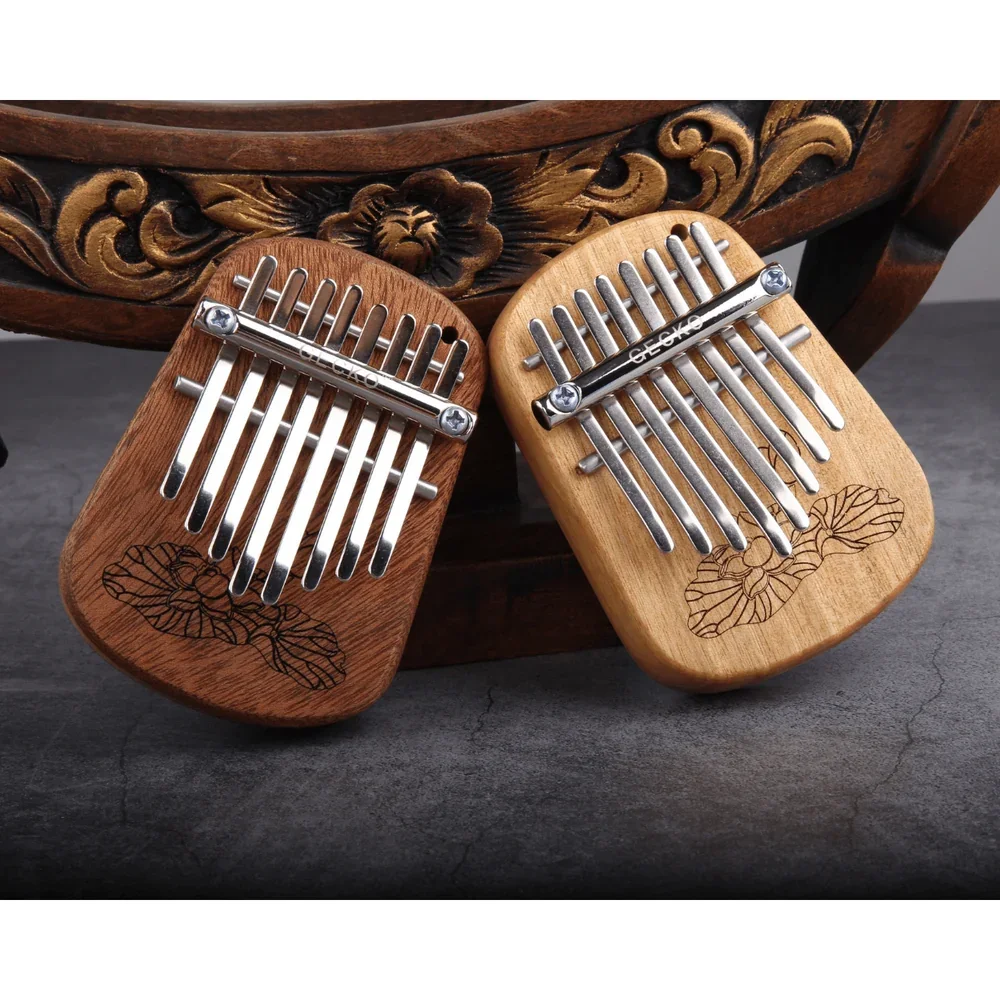
When you are looking to start your kalimba journey, one of the first decisions you will make is choosing between an 8-key mini kalimba and a standard 17-key model. Both are wonderful instruments, but they offer slightly different playing experiences.
- 8-Key Kalimbas: These pocket-sized instruments are usually tuned to a pentatonic scale (a five-note scale where every note sounds harmonious together). Because there are no "wrong" notes, they are incredibly intuitive and great for spontaneous, intuitive play.
- 17-Key Kalimbas: This is the standard diatonic scale instrument. It offers a full C major scale across three octaves, giving you the versatility to play almost any popular song, classical piece, or complex arrangement.
To find the perfect match for your hands and musical goals, explore our curated range of quality-tested instruments by visiting our Shop All Instruments page, or read through our comprehensive Kalimba buyers guide.
Playing Easy Kalimba Songs Letters on an 8-Key Pentatonic Kalimba
If you own an 8-key model, you can still play many simple melodies. Pentatonic scales are designed for mistake-free playing, making them highly relaxing for absolute beginners. While you may need to simplify some of the traditional 17-key tabs to fit the smaller range, the results are always sweet and peaceful.
To find music specifically arranged for these smaller models, read our guide on easy kalimba sheet music made for 8 key pentatonic kalimba, or watch this helpful video tutorial featuring 8 Key Kalimba Easy Beginner Songs Tutorial (18 Easy Songs).
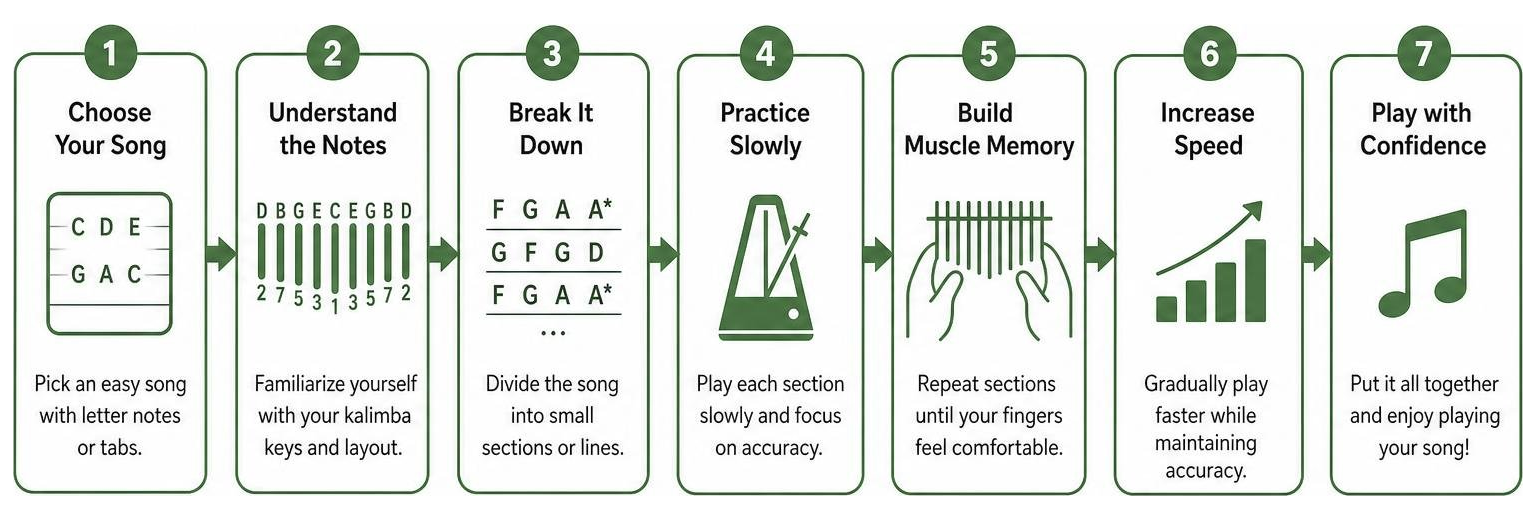
Practical Tips for Quickly Learning Kalimba Songs
Learning a new instrument should be a gentle, enjoyable process. To help you get the most out of your practice sessions, here are a few practical tips we always share with beginners in our Sydney showroom:
- Grow Your Thumbnails: Playing with the fleshy part of your thumbs produces a very soft, muted sound. For that bright, clear, music-box tone, let your thumbnails grow just a tiny bit past your fingertips so you can pluck the tines with the nail.
- Keep Your Hands Relaxed: Cradle the sides of the kalimba gently in the palms of your hands, leaving your thumbs completely free to move. Do not grip the wood too tightly, as this can tire your hands quickly.
- Start Slow: When learning a new tab, play it at a fraction of the actual speed. Focus on getting the correct notes first, and only speed up once your muscles remember where the keys are.
- Keep Your Instrument in Tune: Just like a guitar, a kalimba can occasionally go out of tune if it is bumped or exposed to temperature changes. Use your tuning hammer and a free smartphone app to keep it sounding sweet.
For more answers to common beginner questions, make sure to browse our Kalimba FAQ or visit our main Buying Guide & Product Care hub.
Expanding Your Repertoire: Moving to Intermediate Pieces
Once you feel comfortable with basic nursery rhymes and simple pop melodies, you might want to challenge yourself with more complex arrangements. The standard 17-key kalimba is fully capable of playing beautiful classical pieces and sweeping movie soundtracks.
For instance, the incredibly romantic "Can’t Help Falling in Love" tab has been viewed over 525,000 times by players around the world. Video game soundtracks are also incredibly popular, with the peaceful "Haggstrom" from Minecraft gathering over 382,000 views, and the magical "Howl’s Moving Castle" theme reaching over 324,000 views.
When you feel ready to take that next step, you can find inspiration and tutorials in our guide on beautiful classic kalimba pieces 17 21 key sheet music video.
Frequently Asked Questions about Easy Kalimba Songs
Can I play these songs on any kalimba key?
Most easy kalimba tabs are written for a standard 17-key kalimba tuned to the key of C major. If your kalimba is tuned to a different key (such as G major or B major), you can still play these exact same letter patterns. The song will simply sound slightly higher or lower in pitch, but the melody itself will remain perfectly recognisable.
Do I need to know how to read sheet music to play the kalimba?
No, you do not need to read traditional sheet music at all. Most players use letter tabs, numbered notation, or visual play-along videos. This visual approach makes the kalimba incredibly accessible, allowing you to focus on the physical feel and beautiful sound of the instrument rather than complex music theory.
How do I tune my kalimba if the notes sound off?
To tune your kalimba, you will need a small metal tuning hammer (which is included with almost all of our instruments) and a tuning app on your smartphone. If a note is flat (too low), gently tap the bottom of the tine upward to shorten it. If a note is sharp (too high), gently tap the top of the tine downward to lengthen it.
What is the difference between letters and numbers on kalimba tines?
They are simply two different ways of representing the exact same musical notes. Letters (C, D, E) refer to the actual pitch of the note, while numbers (1, 2, 3) refer to the scale degrees. Both systems are interchangeable, and many tabs include both formats so you can choose whichever one feels most intuitive to you.
Where can I find more free kalimba tabs?
There is a massive, warm community of kalimba players online. You can find thousands of free tabs on dedicated archive websites, community forums, and video sharing platforms. We also regularly upload free tutorials, sheet music, and beginner guides right here on our Melodic Forest website.
Your First Songs Are Just a Few Notes Away
The kalimba is a truly magical instrument. It offers a gentle, accessible pathway into music-making, allowing you to create peaceful, beautiful sounds from the very first day you hold it. By using simple letter notation, you can bypass the frustration of traditional sheet music and focus entirely on the joy of playing.
At Melodic Forest, we are incredibly passionate about helping people discover the calming power of sound-healing instruments. From our family-run beginnings with just five kalimbas, we have grown into a dedicated team that personally tests every single instrument we offer for playability, character, and sound quality.
If you are in New South Wales, we would love for you to visit our warm, welcoming Sydney showroom in Villawood to try these beautiful instruments in person. If you are shopping from home, we are always here to support you with expert advice, free tutorials, and ongoing care.
Are you ready to begin your own musical journey? Explore our resources and handpicked collections today:
- Find your perfect instrument: Shop All Instruments
- Read our expert advice: Kalimba Buyers Guide
- Learn how to care for your instrument: Buying Guide & Product Care
- Get in touch with our friendly team: Contact Us









Leave a comment
This site is protected by hCaptcha and the hCaptcha Privacy Policy and Terms of Service apply.